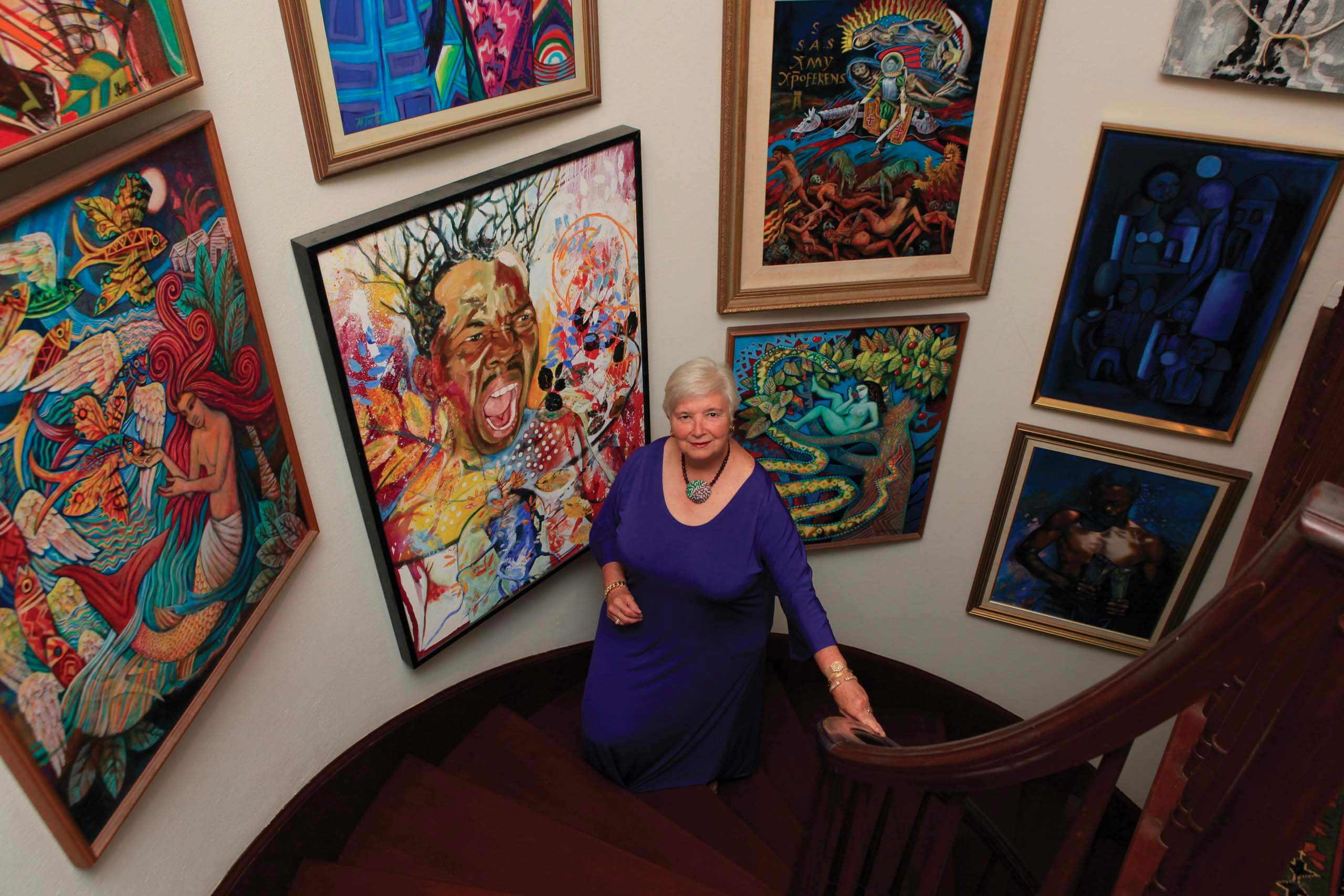
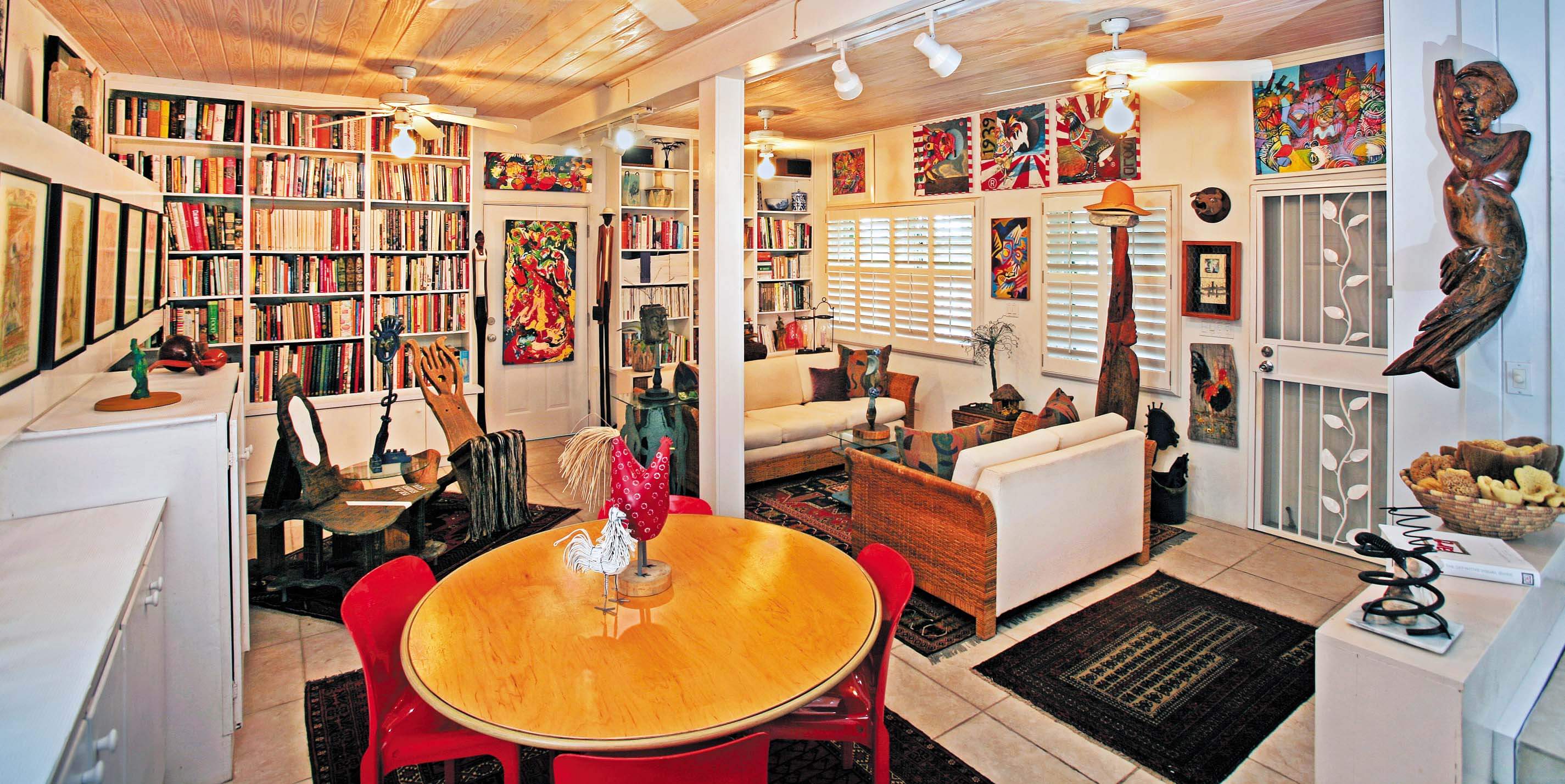
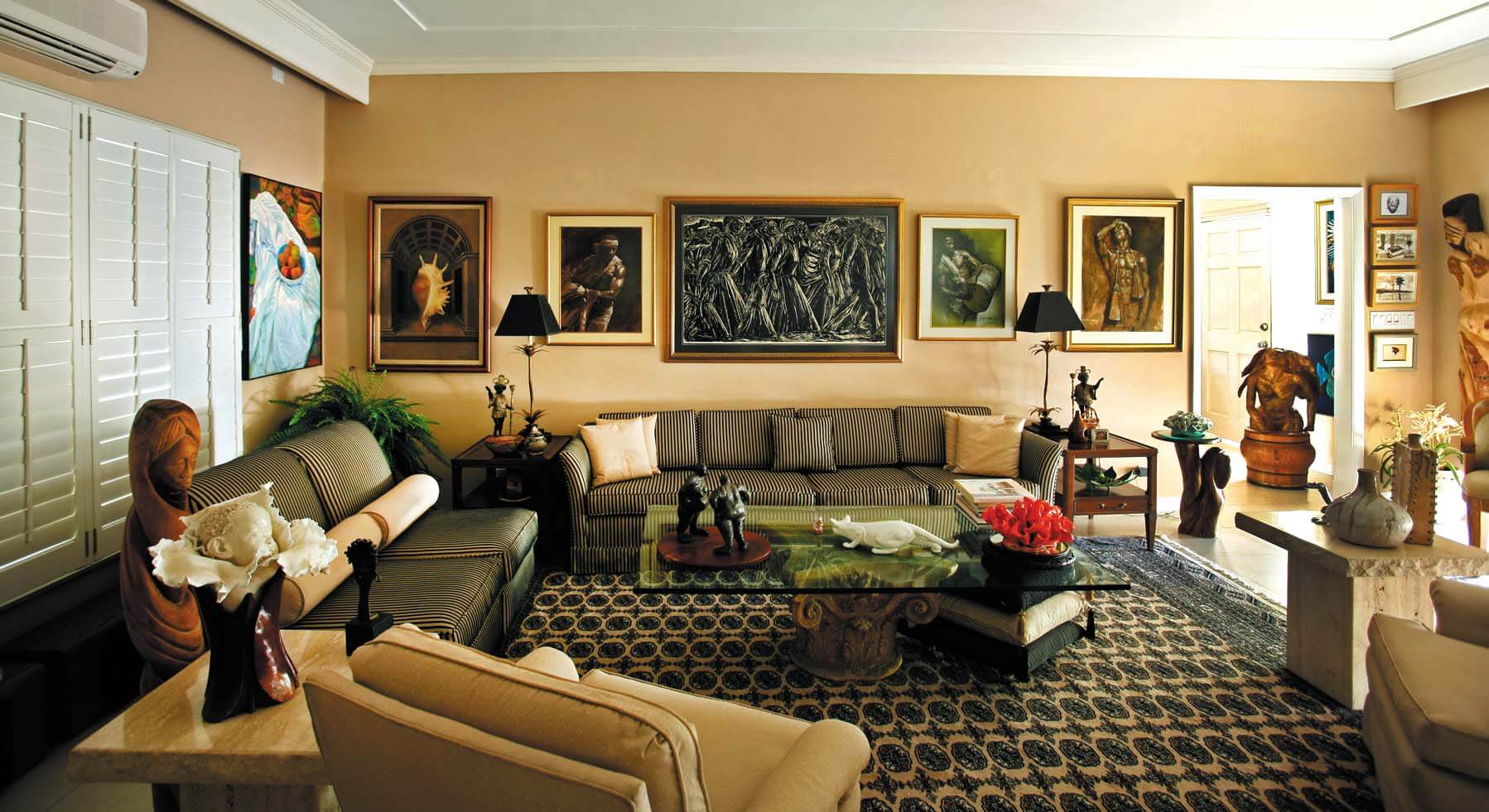
At 82, Dawn Davies has been collecting Bahamian art for nearly six decades, long before it was fashionable, institutionalized or globally visible. Her collection, large and idiosyncratic, is less a trophy room than a living archive: of artists, of places, of a country coming into its own. In her home, paintings, ceramics, postcards, books and paraphernalia about The Bahamas, as well as garden sculptures, coexist with a sense of wit — and a very precise hanging logic. What emerges is a portrait of a woman who collects not to impress, but to remember, preserve and quietly insist on the value of Bahamian culture.
Dominique Breard: Dawn, you have been collecting art for most of your adult life. When you look back, how did this commitment first take shape?
Dawn Davies: Without any grand intention. It expanded gradually, almost organically, rather topsy-turvy as the expression goes. I began with a few pieces that I liked to decorate my home. I’m 82 now, and I’ve been collecting for roughly sixty years, so what exists today is the result of time, curiosity and sustained interest rather than a predetermined plan.
DB: Your earliest acquisitions reflect a period when Bahamian art was produced with the visitor in mind.
DD: Very much so. Sun, sand and sea were the dominant themes. Scenic views, idyllic beaches, paintings meant to evoke an uncomplicated paradise. That history is present in my collection, and I never tried to erase or revise it. I wanted the collection to reflect reality as it was: fine art alongside craft, accomplished works alongside tentative ones. The good, the bad and the ugly all have their place – masterpiece and kitsch, I treasure it all. I wanted the collection to be representative; not curated into perfection, but honest.
DB: Over time, that visual language changed significantly.
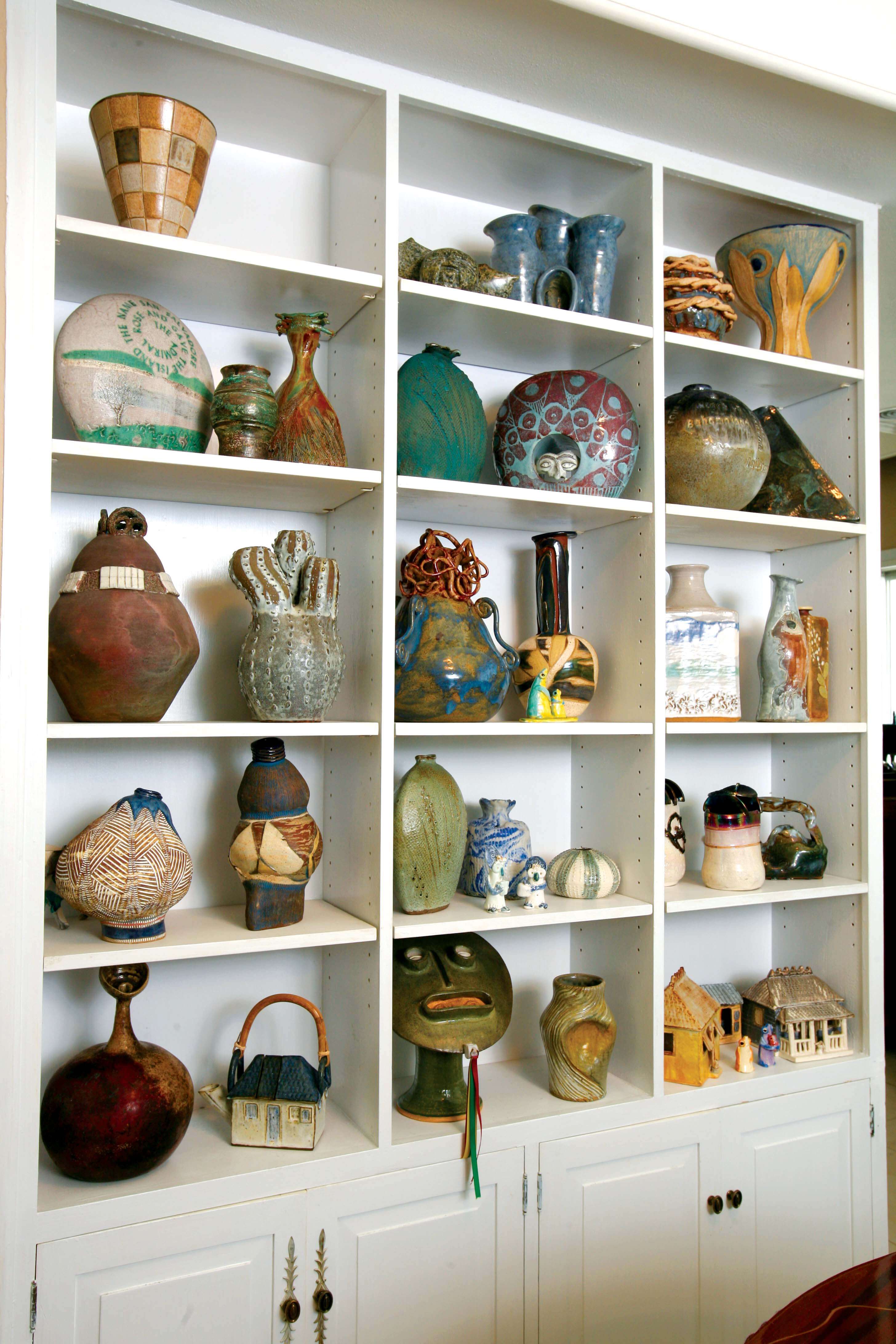
DD: Hugely. As the country developed, so did our artists. Independence of The Bahamas in 1973 brought new confidence; an ability to speak with one’s own voice rather than responding to expectation. Artists began addressing identity, politics, race and personal history more directly. Today, Bahamian artists operate internationally with remarkable assurance. Tavares Strachan, based in New York, is a major figure in the art scene; as is Lavar Munroe, Kendra Frorup, Jeffrey Meris, Jason Bennett, Lillian Blades, April Bey, Anina Major and others who are working in the United States. Steven Schmid, Gio Swaby and Veronica Dorsett are based in Canada; and Lynn Parotti and Blue Curry are based in London. I love the work of ceramicists including Jessica Colebrooke and Imogene Walkine, as well as the brilliant work of Denis Knight and Sue Bennett-Williams. This year, the amazing artwork of Lavar Munroe and John Beadle will be represented at the Venice Biennale – a wonderful achievement for these artists and for Bahamian art.
DB: Your collection also extends well beyond the contemporary moment.
DD: The historical dimension became increasingly important to me. I was drawn to artists, many of them immigrants, who settled in or repeatedly returned to The Bahamas and painted what they observed here. While somewhat detached observers, they were part of the early cultural fabric. Their work forms an early chapter of the art history of The Bahamas. As a result, this collection begins around the 1890s and moves steadily forward.
DB: You’ve been remarkably diligent in documenting the collection.
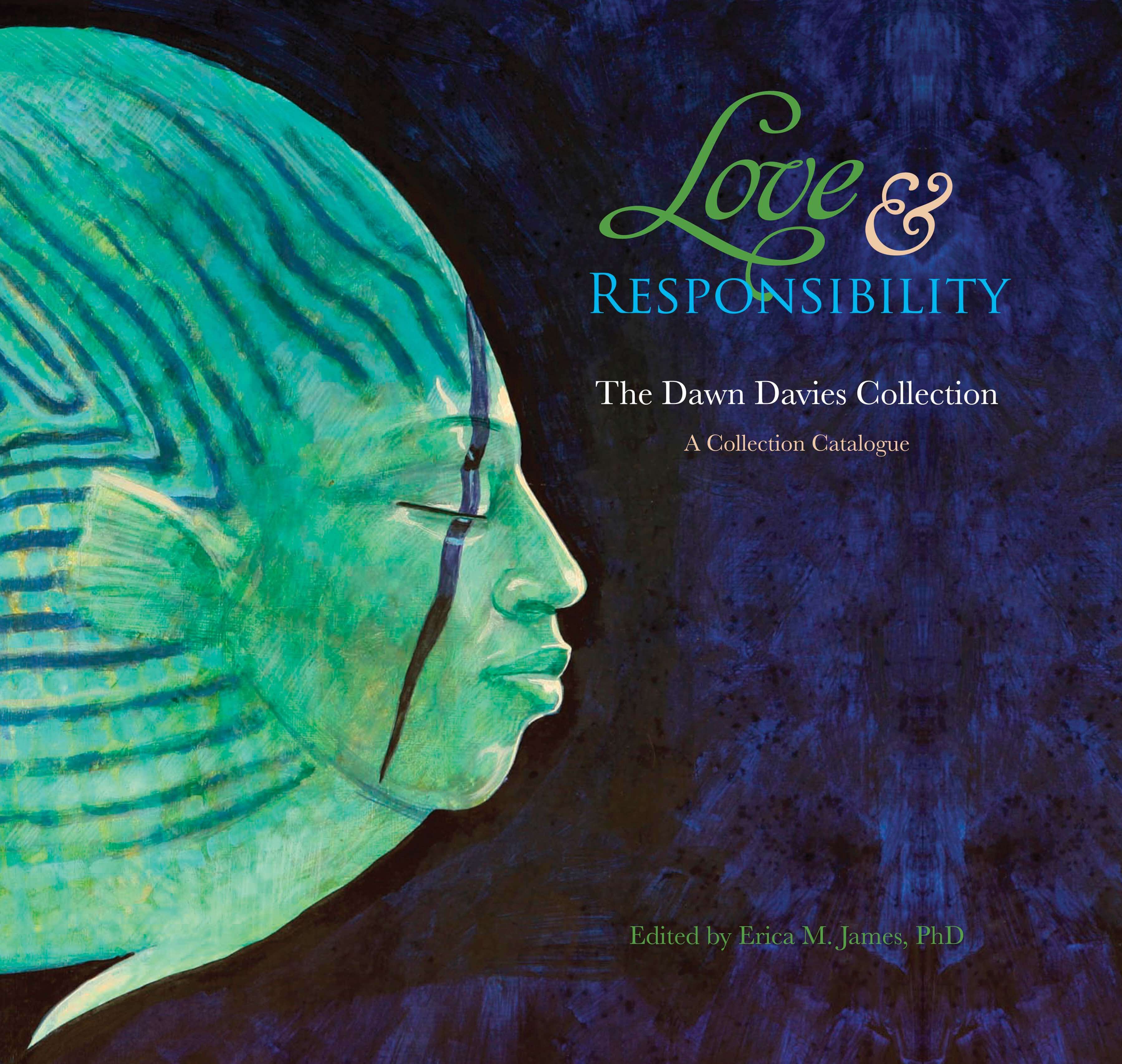
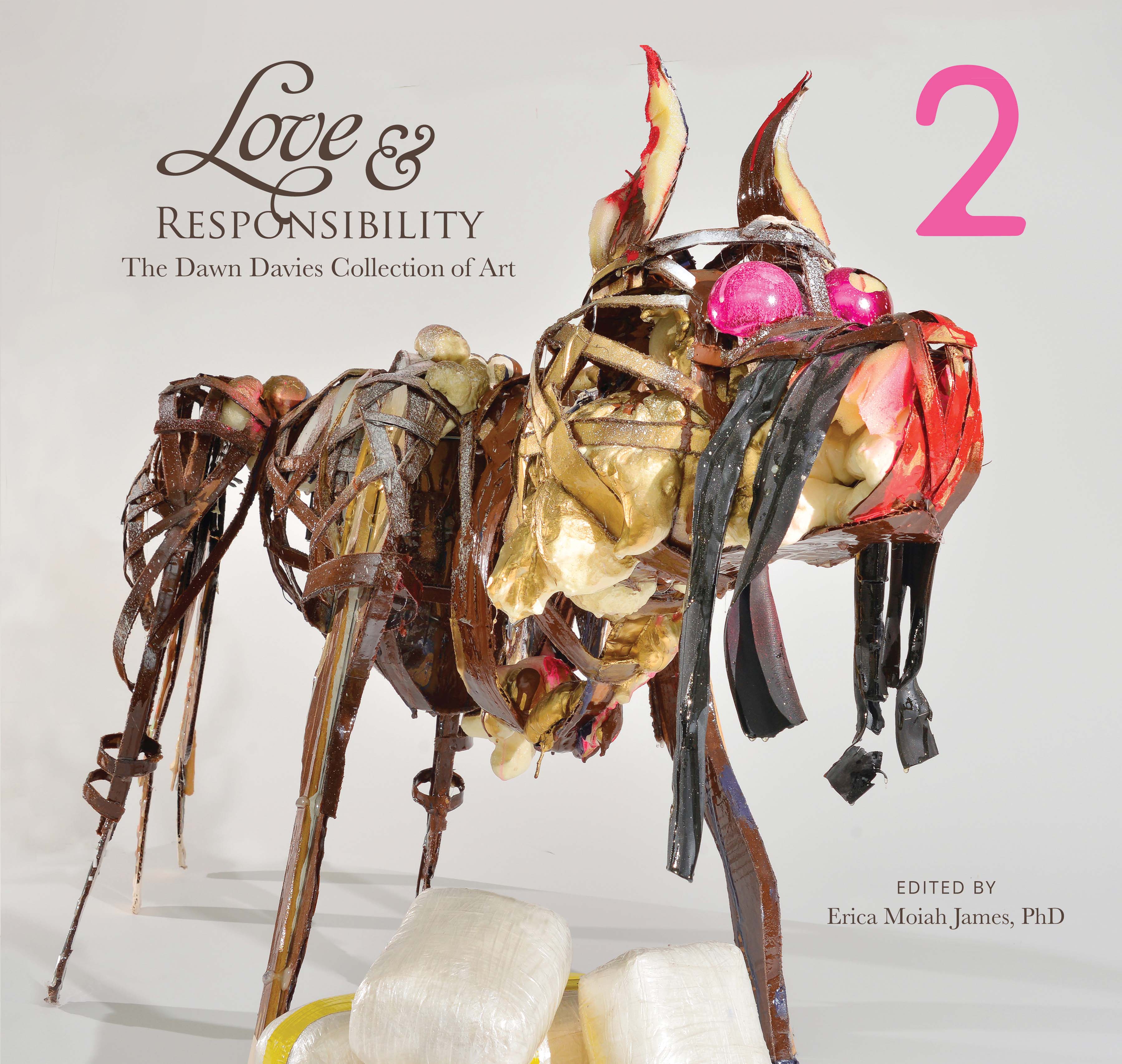
DD: I think documentation is part of the responsibility. Love & Responsibility: Volume One, published in 2011, features approximately 1,700 works of art, weighing an unwieldy eight pounds. It was presented to Sir Arthur Foulkes, Governor-General of The Bahamas, and later by the Prime Minister Perry Christie to Pope Francis in Rome. Volume Two followed in 2021 with roughly 900 additional works, and was presented to the then Governor-General, Sir Cornelius Smith. I am deeply indebted to Dr. Erica Moiah James for editing these tomes and providing the grounding essays, to Dionne Benjamin-Smith for the graphic design and to the late Roland Rose for his talent in photographing the artworks. Work is now underway on Volume Three, which will include just over 500 works acquired since then, as well as other works on paper that represent the Bahamian past.
DB: Alongside these volumes, you’ve published books that reveal a lighter side.
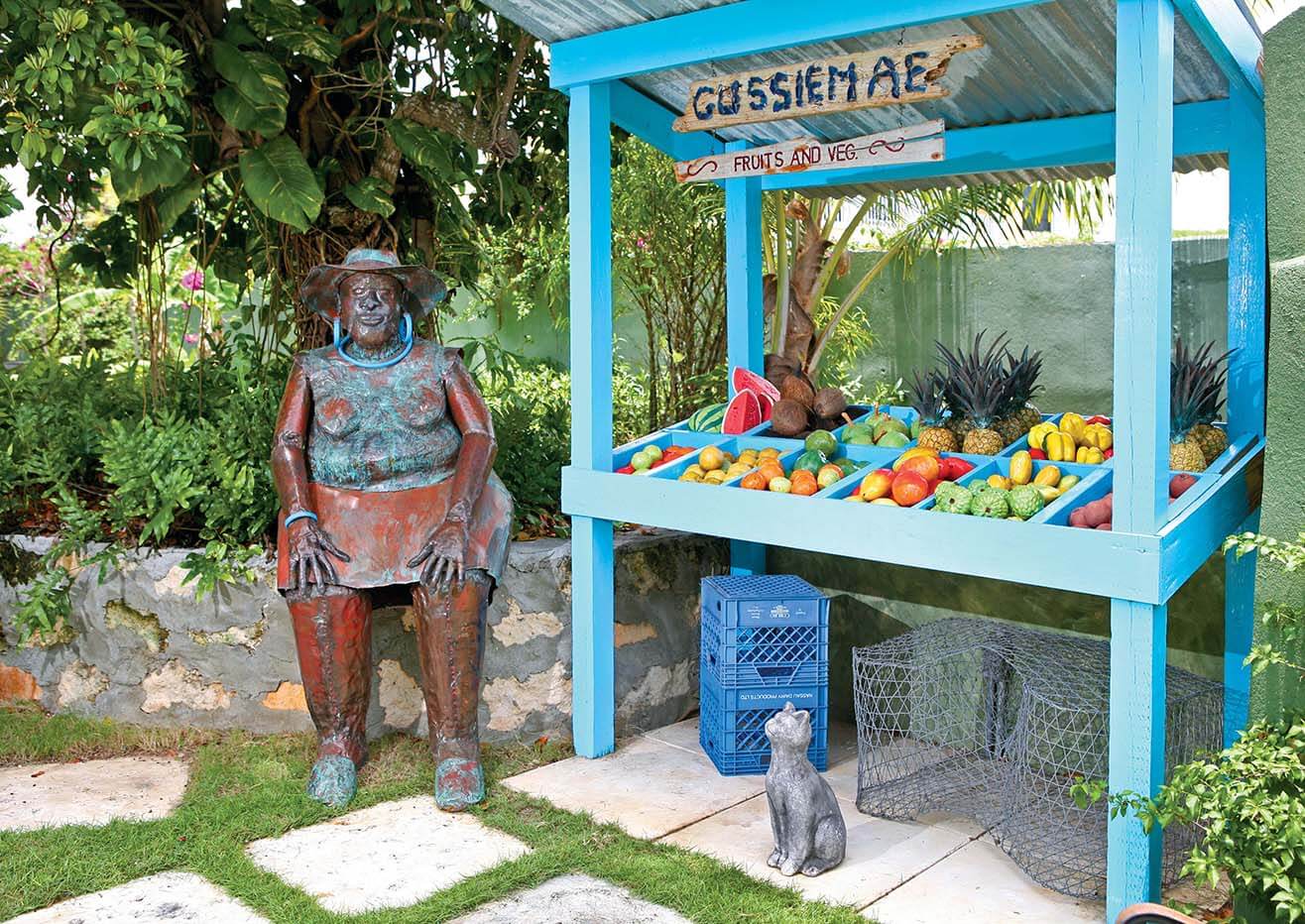
DD: I enjoy things of utility and beauty. I loved to cook and entertain. I bought or inherited household items from grandmothers, my mother and aunts. Tablescapes — Just for Fun grew out of that, further fueled by my inclination to collect utilitarian and decorative items. I liked creating themed table settings using what was on hand. I offered lunch in my greenhouse with escargots on the menu, with table decorations including ceramic garden snails.
DB: And Dilly Dally All the Day?
DD: Yes, that book was co-written with my rescue dog, Boo-Boo, who allowed the book to reflect my sense of wit while he explored the garden and the artworks that he encountered. He insisted that the full proceeds from its sale be donated to The Bahamas Humane Society, which gave it a purpose beyond itself.
DB: You’ve also played a role in bringing Bahamian art into public view.
DD: Since the opening of the National Art Gallery of The Bahamas (NAGB) in 2003, the landscape has expanded dramatically. My role has been modest, but certainly one of support. I’ve lent works to the NAGB and others for various exhibitions, and currently over three hundred works are on loan to Baha Mar, overseen by the executive director of arts and culture, at John Cox, so that the works can be seen rather than stored. I greatly admire the promotion of Bahamian art by Doongalik Studios, Popop Studios, the University of The Bahamas Pro Gallery, Tern Gallery, Contemporary Art Bahamas (CAB), The Current at Baha Mar and others. The Incubator for Collaborative Expression (I.C.E.), founded and operated by Antonius Roberts, is particularly compelling. It’s an old icehouse repurposed into a space for exhibitions, workshops and material experimentation. Then, there’s the gallery space at Hillside House and Sixty 2 Sixty Gallery and, finally, the extensive support by the D’Aguilar Art Foundation and the V&M (Vincent and Marina) Art Gallery.
DB: Your collecting approach feels expansive yet highly selective — playful, confident and precise at the same time.
DD: I collect with conviction, but without solemnity. Sometimes a work enters the collection because of its formal or conceptual strength; sometimes because of how it converses with other works I already own. Occasionally, it enters simply because it gives me pleasure, and I allow that. There is room for lightness alongside seriousness. That balance matters to me.
DB: You’ve expressed the desire for a permanent home for the collection.
DD: Ideally, a museum or foundation that would keep the collection intact and on display. I’m realistic about the challenges. Still, the collection was assembled with continuity in mind: a timeline, a cross-section, a record of voices, artful and historic. I hope it can remain whole.
DB: After six decades of collecting across generations, styles and moments of cultural change, how do you now understand the act of collecting itself?
DD: I think one should collect what one genuinely likes. That has always been my guiding principle. My first painting was a bowl of daisies by Alton Lowe, which I bought simply because I thought it was beautiful. Recently, I acquired another painting of a bowl of daisies by Brent Malone, painted around the same time, because I was interested in how the two works speak to one another, painted by two of our masters. Over time, I’ve tried to build a collection that is representative of different moments and ways of working. That includes artists whose practices are very diverse, such as Kendal Hanna and Amos Ferguson, both of whom I admire greatly, and the masterful work of Maxwell Taylor, and I could go on and on. What matters to me is not uniformity, but breadth, allowing the collection to reflect the range of Bahamian artistic talent and expression.
Collecting, for me, has never been about pedigree – it’s been about having a representative collection of work in and of The Bahamas. It’s about living with works of art, allowing them to exist in conversation with other works, and letting those relationships evolve over time. That has been rewarding and given reason enough to continue. However, I do believe it is time to stop and consolidate, while acknowledging my gratitude to all those artists and artisans, many of whom are personal friends, too many to mention here, whose friendship and artistry have been so enriching.