For the Antoni siblings — Brian, Janine and Robert — paradise was never an abstraction. It had a sound, a smell, a temperature and a rhythm that seeped into the body long before it ever shaped their careers as visual artists (Janine) and writers (Brian and Robert).
The Antonis grew up mostly in Freeport, Grand Bahama, during years when the island itself felt young and slightly unfinished, a place still being imagined into existence. Roads cut through pine forest. Neighborhoods emerged from bush. The sea was not scenery so much as a constant presence, close enough to be heard at night through open windows.
Brian Antoni, now 66, remembers the sound clearly: the ocean outside the family home on Seaview Lane in Lucaya. A sound that, as he describes it, hugged him. “It spoke to me,” he says, “in a language that I understood and trusted.” Even now, decades and continents later, it remains the sound that calms him most. When he thinks of growing up in The Bahamas, he doesn’t recall moments so much as a continuous sensory immersion. “It’s all one memory,” he says. “I grew up in paradise.”
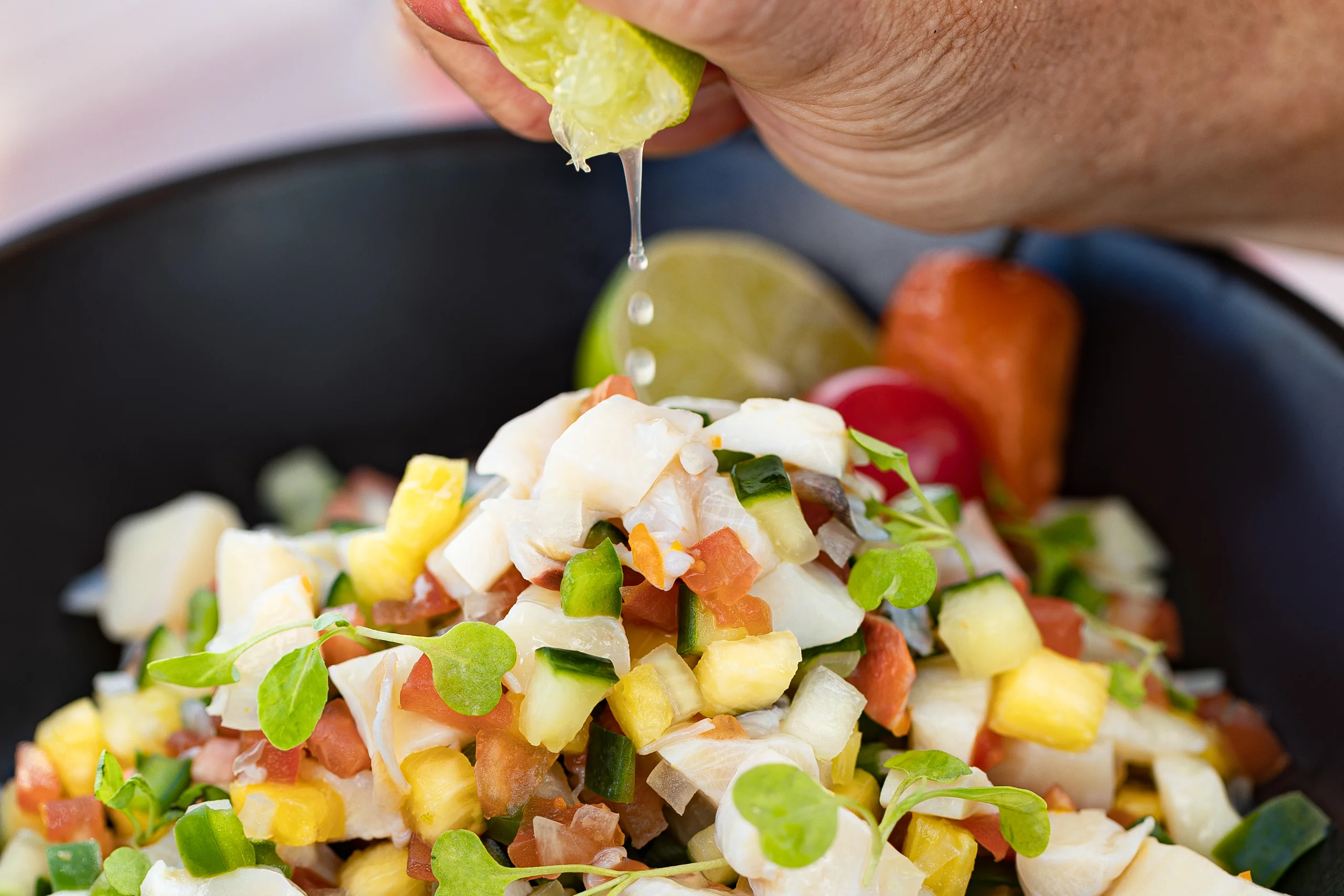
For Brian, tastes of the island come up just as immediately as the sounds. For instance, fresh conch salad — the star ingredient cut straight from the shell on the beach — prepared by Billy Joe at a small shack near the old Holiday Inn. It remains, unequivocally, Brian’s favorite food in the world. “No matter how many Michelin-star restaurants I eat at,” he says, “there’s nothing I’d rather eat.”
And then there are the smells; the pine forest after rain, sun and water mixing in the air, a scent he associates with childhood freedom. “That smell,” he says, “I’ll never forget it.”
Those sensations did not fade as he grew older. They became reference points. Memories he describes as “vacations floating around inside my crowded brain,” available whenever he needs them.
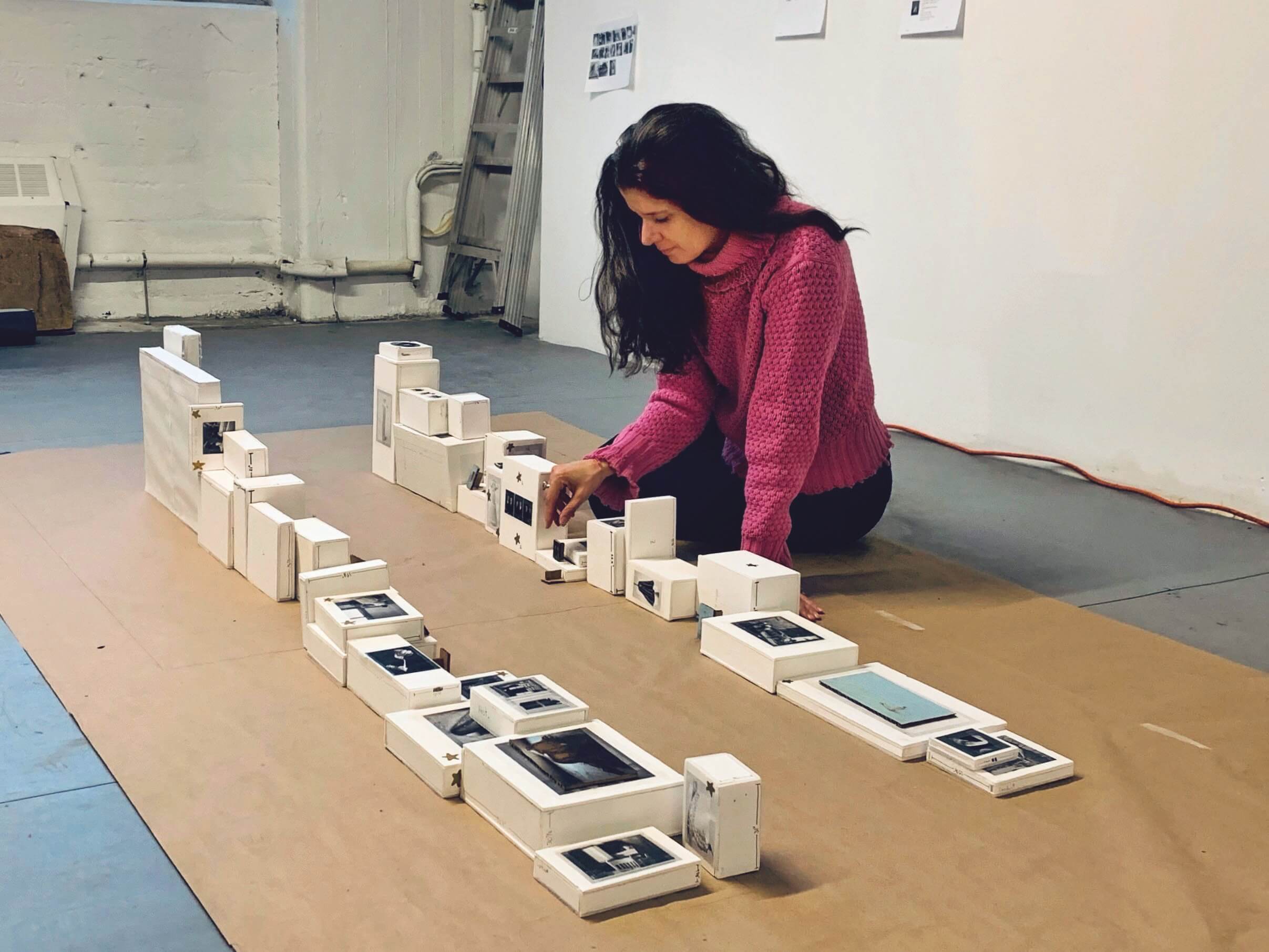
Janine Antoni, the youngest sibling, now 62, remembers childhood as a kind of expansive solitude. Her mother, asked years later why all three of her children became creatives, had a simple answer: “I left them alone on a beach.” Janine took full advantage of that freedom, spending hours wandering, singing, collecting shells and imagining worlds into being.
She remembers the shells as more than souvenirs — they were lessons. Sculptures shaped slowly by the ocean, each one recording a life’s history in its growth patterns. She sorted them by genus and size, unconsciously studying scale and form. Beaches themselves became systems to read. One beach heavy with sand dollars, another scattered with sunrise tellins. Tide lines that organized driftwood, rope, seaweed and the inevitable debris left behind by passing ships.
The human remnants fascinated her as much as the natural ones. Plastic softened by salt and time and objects claimed by barnacles were evidence of the ocean’s effort to claim what had been discarded. There was, in the Antoni household, no hierarchy of materials. Everything had potential. Driftwood could become a table or a sign; shells could cover lamps, boxes, even entire kitchen walls; and sea glass became jewelry. Creativity was not precious, it was instinctive.
Their home was also filled with voices. Robert Antoni, the eldest sibling, now 67, recalls that Freeport placed him at one end of the Caribbean archipelago, far from Trinidad and Tobago, where his family history stretches back nearly two centuries. “I like to say my writing comes from both ends of the Caribbean archipelago,” he notes.
That distance sharpened his ear. Under one roof lived his paternal grandmother, Granny Mina, who had first traveled from Venezuela to Trinidad as a teenager and spoke in a Spanish-inflected Trinidadian vernacular, and his maternal grandfather, Papa, whose British Caribbean voice carried a different cadence entirely. A Barbadian housekeeper named Clarine added yet another rhythm to the mix. “Those voices,” Robert says, “were really the genesis of my writing.”
Those voices became foundational. Not just their stories, but how they were told. The exaggerations and the idioms illustrated the way language bent to carry experience. Robert’s writing emerged from an insistence that those voices belonged on the page as they were heard in that Bahamian house. His first novel, Divina Trace, would go on to win the Commonwealth Writers’ Prize, but its roots were domestic and intimate, shaped by listening as much as by imagination.
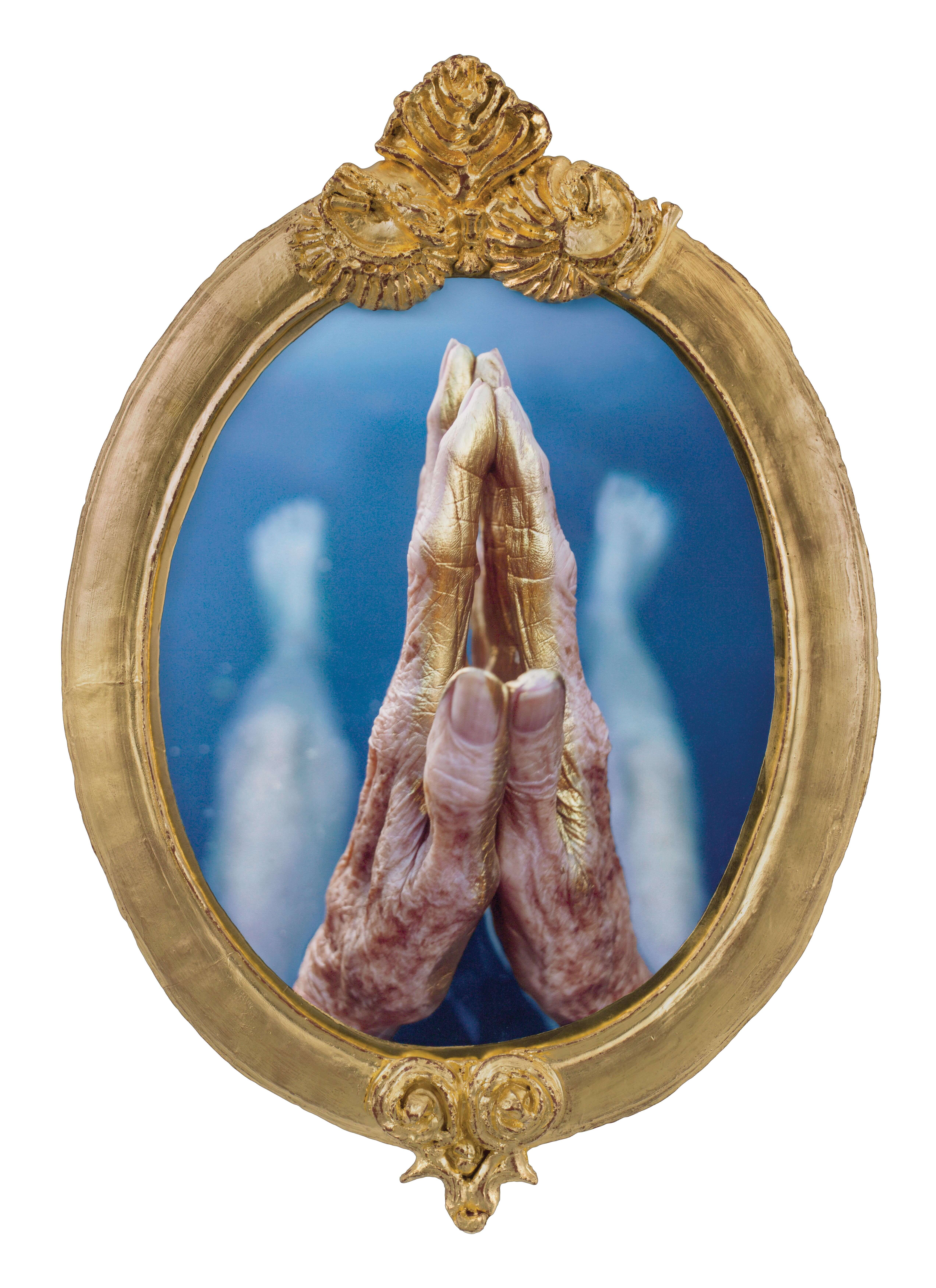
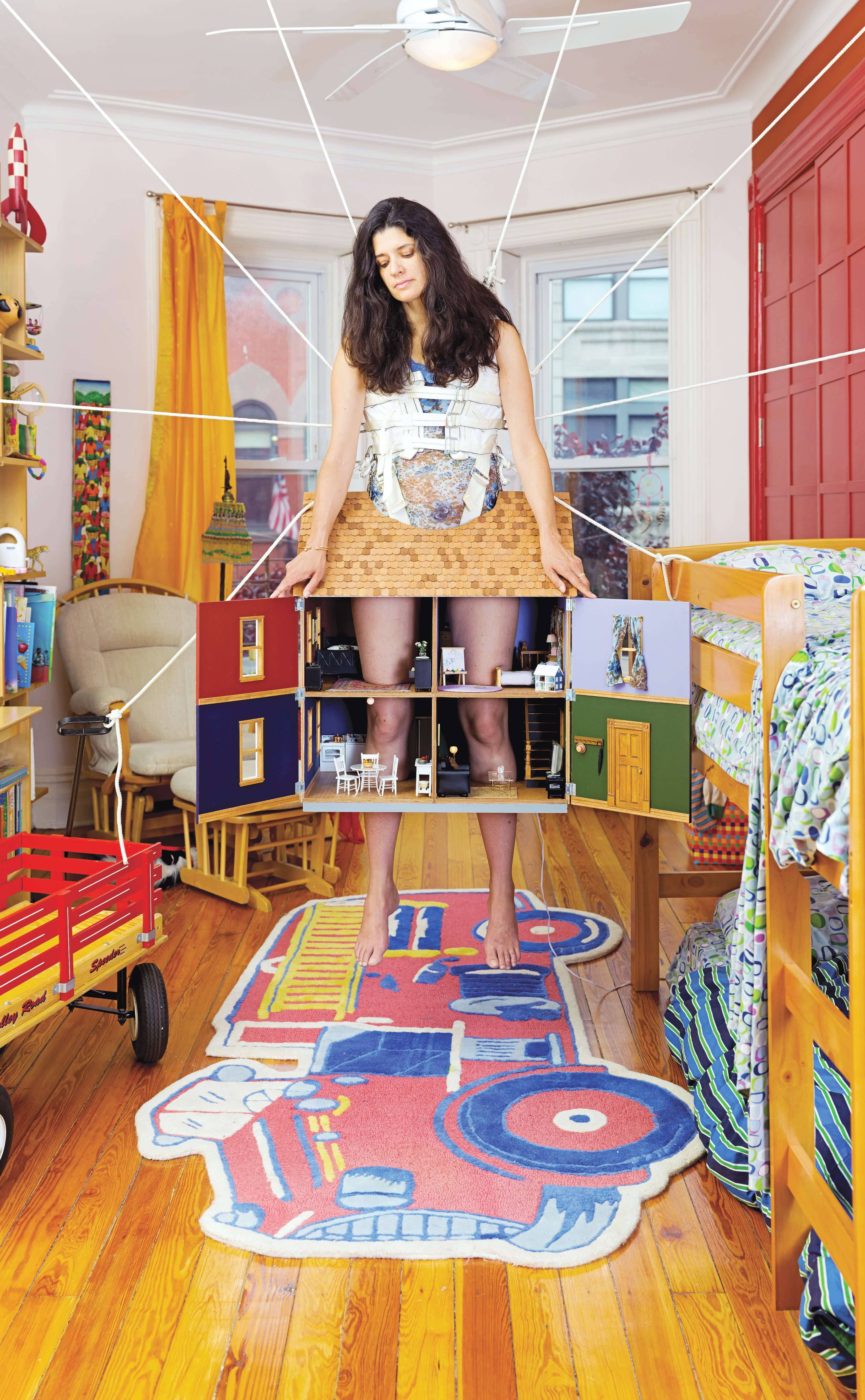
Their parents encouraged this attentiveness. There was no pressure to fit in, only a quiet confidence that each child would find their own form. Janine would later realize how rare that environment was when she left The Bahamas to study abroad, where bodily expression often had to be restrained and energy contained. Her work today, which uses her own body as material and method, is a direct inheritance of what the islands gave her first: a belief in embodiment. “I miss dancing,” she says simply. “I miss the rhythm.”
Brian’s imagination was also shaped by watching Freeport itself come into being. He remembers his parents being driven through bush in a Jeep, shown where harbors and hotels would one day rise.
His father became the first doctor in the Northern Bahamas, later lending his name to the Rand Memorial Hospital, traveling between islands and treating patients wherever they were found.
Summers were spent moving by boat from place to place, medicine aboard, stories accumulating. The family lived not only in Freeport, but across The Bahamas. Deepwater Cay, Gorda Cay, and North Eleuthera near Spanish Wells. Each place added texture, another way of understanding island life. Paradise Island, too, sits comfortably in Brian’s memory. Hurricane Hole Marina as a waypoint. There were meals at Atlantis and formal moments at Government House in Nassau. Encounters with figures such as Count Basie, Cassius Clay, Mr. and Mrs. Arthur Hailey and Harry Oakes.
All three siblings eventually left The Bahamas, yet no one ever left it behind. Janine now lives in New York; her work held in major museum collections worldwide. She is currently working toward a major retrospective at the Museum of Contemporary Art Chicago, opening in December 2027 — a comprehensive look at a 35-year career that began, quietly, on a Bahamian beach.
Brian’s novel, Paradise Overdose,drew directly from the intoxicating evolution of island life, capturing its beauty and volatility with equal affection. Robert continues to write and teach in New York, preparing for the publication of his forthcoming novel, From Inside Here, due in March 2027.
What unites the Antoni siblings is not nostalgia, but fluency. An understanding that The Bahamas is more than a destination. It is a place where ideas form. In a place often reduced to surface and spectacle, their story reminds us that the most enduring luxury of island life is not what is built, but what it allows to grow.