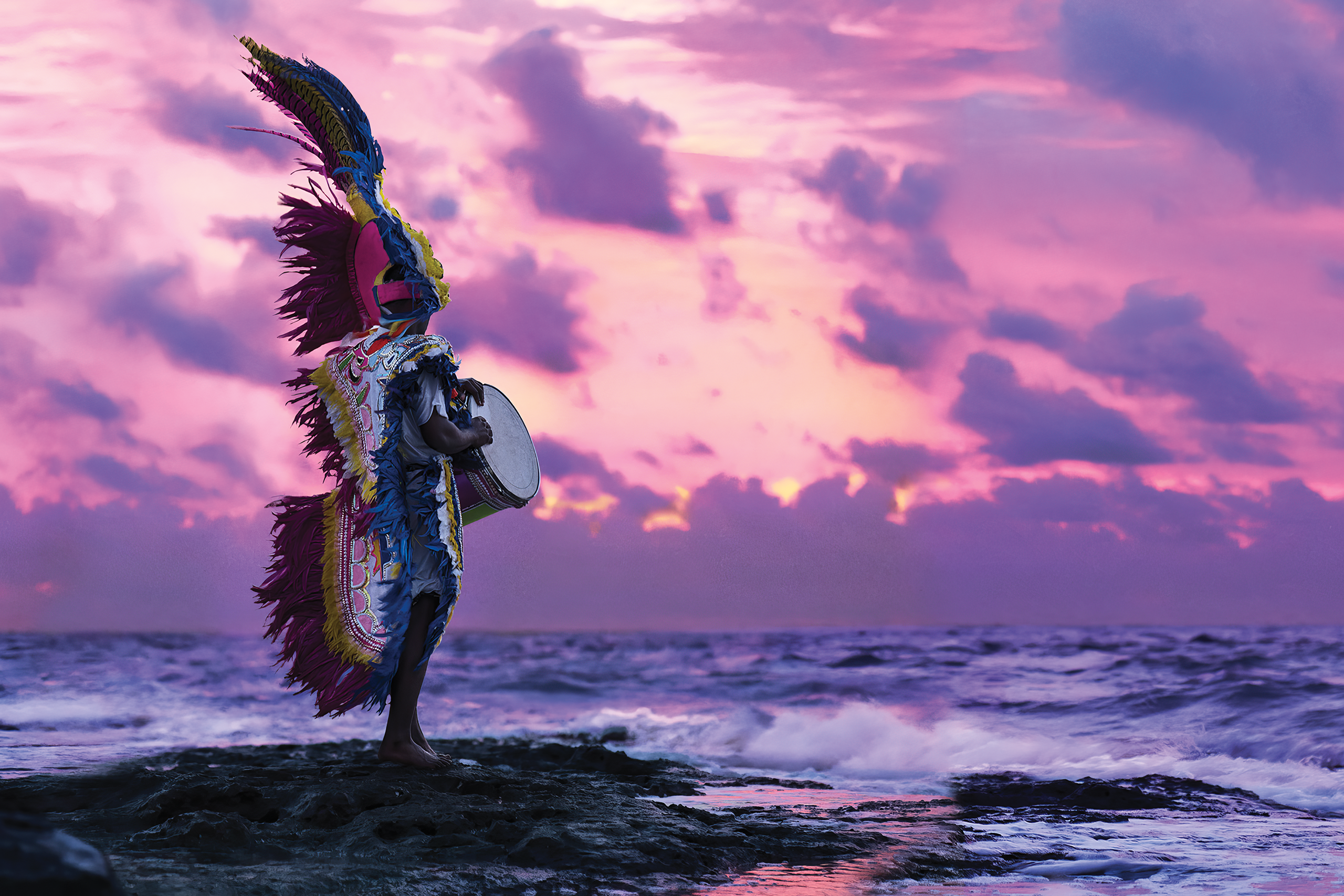
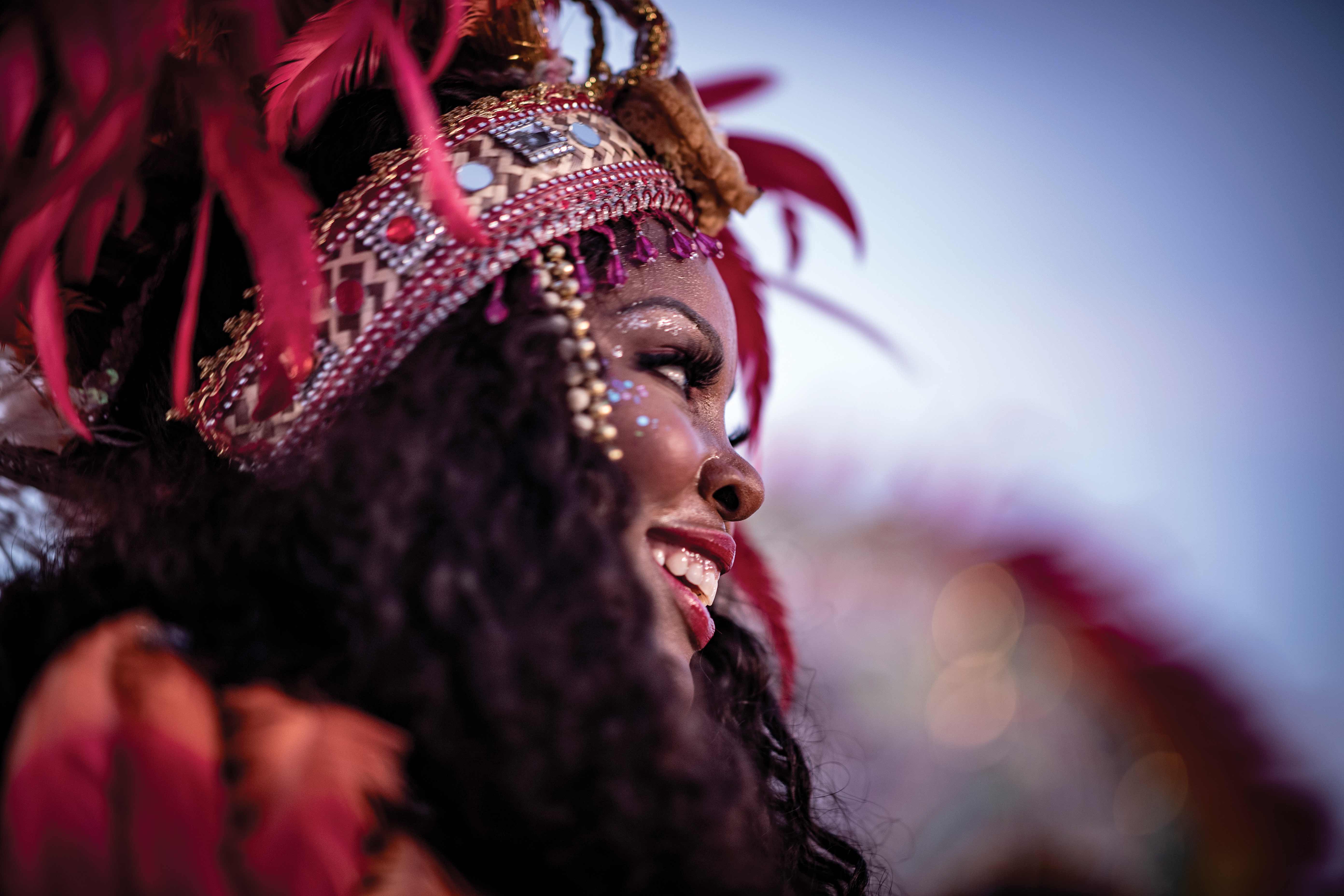
On Boxing Day and New Year’s Day, an energetic street parade unfolds across every Bahamian island, encompassing percussion music, choreographed dancing and show-stopping costumes — all made by hand. As The Bahamas’ most important annual event, and one of the most thrilling ways to experience Bahamian culture, the Junkanoo Festival combines music, movement and tradition in a swirl of color and sound that dates back more than 200 years.
“Junkanoo represents family traditions, friendly rivalries, community and that unmistakable feeling when the drums start to beat,” said Nikia Deveaux-Christie, director of marketing at the Nassau & Paradise Island Promotion Board. “It is more than a festival. It’s part of who we are. Whether you rush, play music, build costumes, or simply spectate, Junkanoo connects all of us in a very personal way.”
That connection is apparent across the archipelago. In Nassau, major troupes like the Saxons, One Family and the Valley Boys spend a year designing themes, engineering massive costume structures and arranging brass and percussion compositions. A single troupe can involve several thousand participants. Each group develops a theme drawn from Bahamian mythology, global history or contemporary culture and transforms it into an impressive large-scale production comparable to Mardi Gras. Junkanoo is also fiercely competitive, with junior and senior groups vying for cash prizes and bragging rights in music, choreography, dance and theme. The high stakes fuel remarkable creativity, pulling spectators into the excitement as they cheer on their favorite teams.
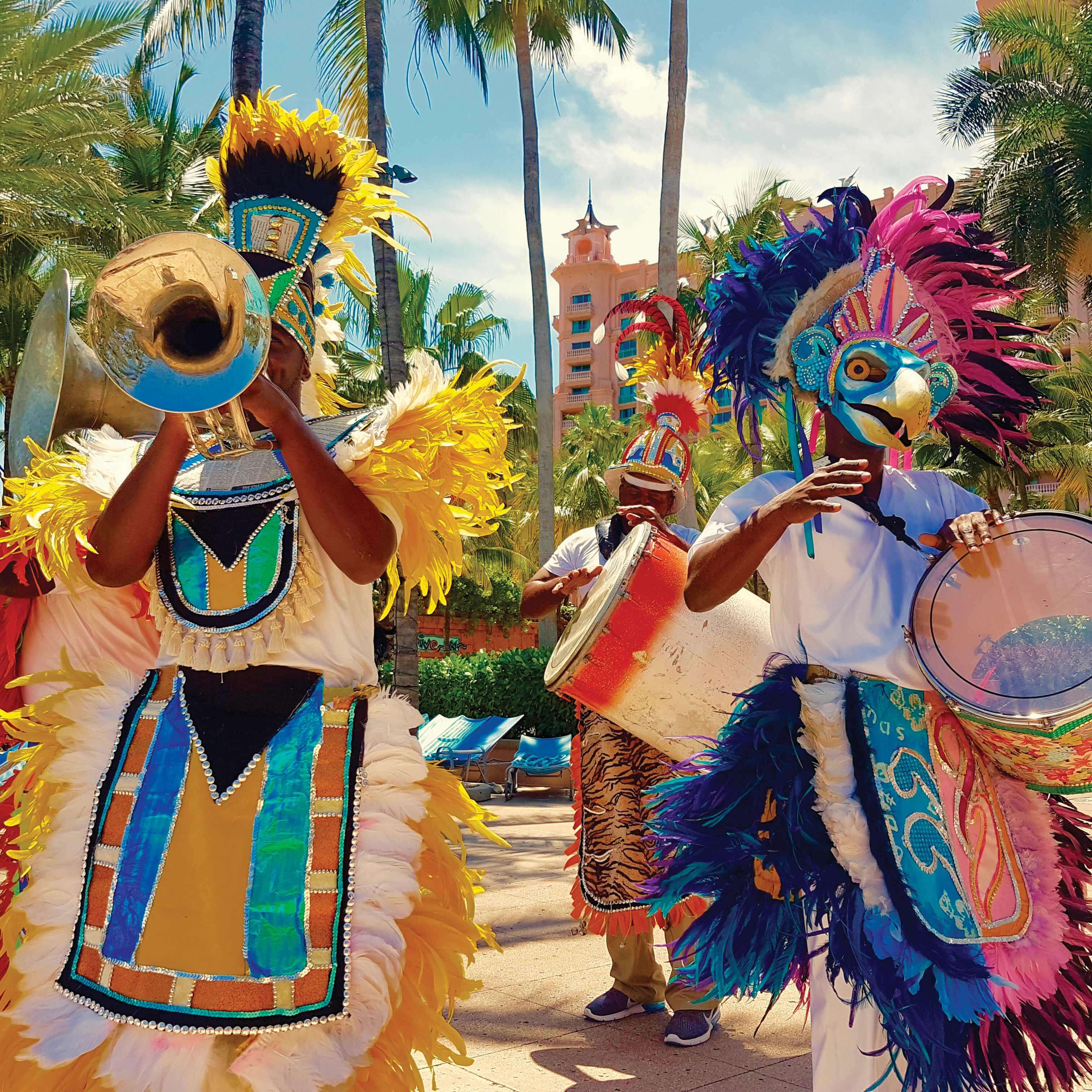
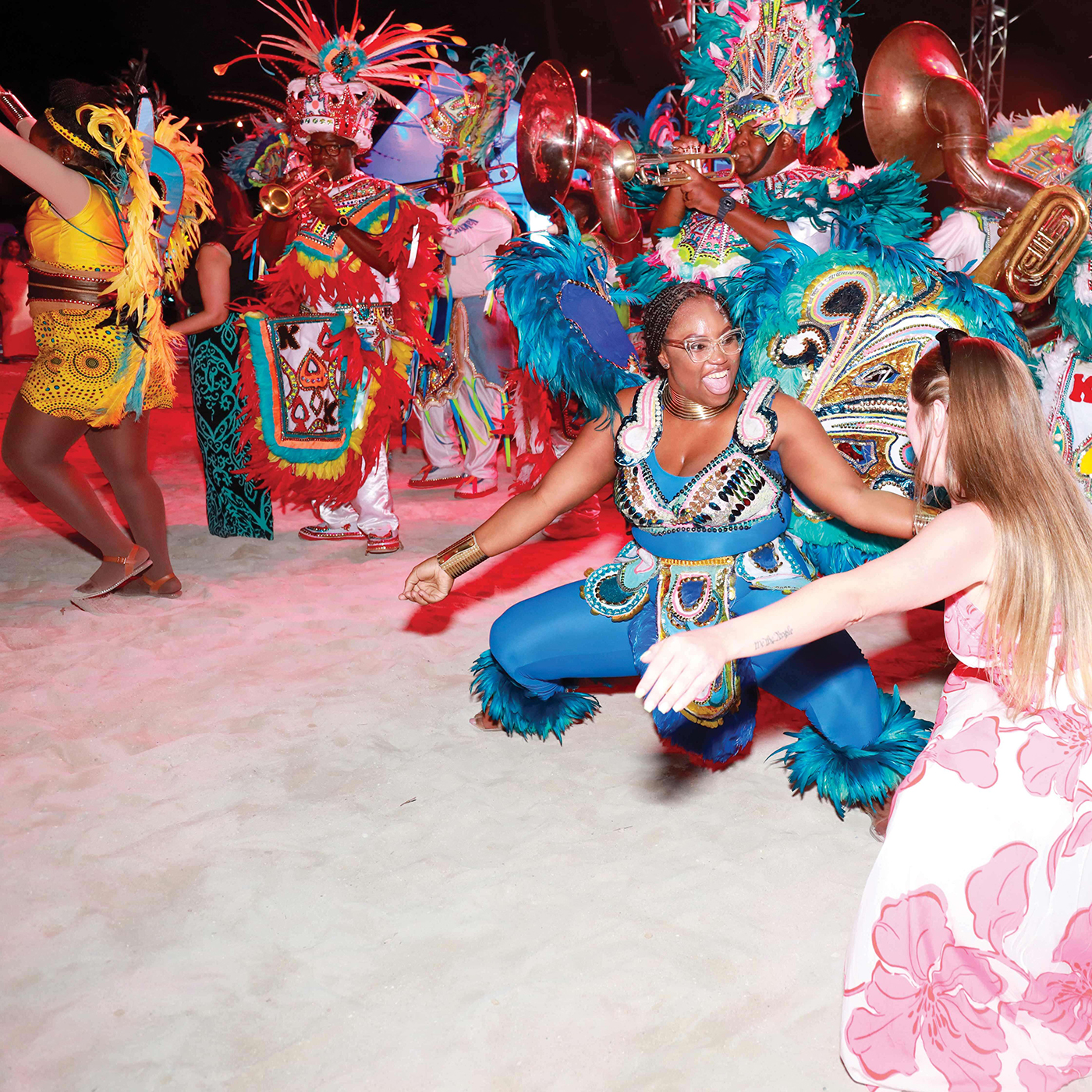
Beyond the biannual festivals, local artists and musicians give visitors a taste of the experience throughout the year. Paradise Island, for example, holds Junkanoo rush-outs every Tuesday and Friday evening at Atlantis Resort. The parades take place in Marina Village, with top musicians and dancers drawn from major Nassau groups and led by celebrated Bahamian artist Stan Burnside.
“In the old days, Junkanoo was a completely freeform event. It wasn’t as much of a presentation; it was just people coming together and enjoying themselves,” Burnside explains. “As the years went on, the art of costume construction evolved, the vocabulary of design and color evolved, and the music evolved. When I was young, there was no brass section, so there wasn’t much melody. It was all rhythm, goatskins and drums. Nowadays, it’s a whole theatrical production with full orchestras and a big audience. Some people call it ‘the greatest show on Earth.’”
What hasn’t changed, Burnside emphasizes, is the festival’s spirit of inclusivity. Everyone is allowed to become part of it, and every segment of society is involved. While Junkanoo is largely rooted in African ancestry, you’ll also find European, Indian and Chinese participants coming together seamlessly, working on the music and costumes. That’s why, Burnside says, Junkanoo is the Bahamian way of declaring, “This is our party, and everyone belongs.”
When you think of Junkanoo, you think of all these different cultures existing as one.”
That openness is also reflected in the festival’s themes. Bahamians frequently incorporate cultures from around the world. “You might see the design motifs of Great Britain, Mexico and Africa all sort of jumbled together,” says Burnside. “And it’s for this reason I feel Junkanoo is a true expression of the Bahamian spirit. Our country’s motto is: Forward, Upward, Onward, Together. When you think of Junkanoo, you think of all these different cultures existing as one.”
At the Marina Village celebration, the music blends traditional Junkanoo rhythms with contemporary hits by artists like Prince, Lady Gaga and Queen, performed with an array of brass instruments, cowbells, whistles, scrapers and drums. “We ensure it’s a relatable and fun experience,” said Antonio Johnson, director of entertainment at Atlantis. “It’s a real participatory experience, everyone from young children to elderly grandparents join in to dance and celebrate.”
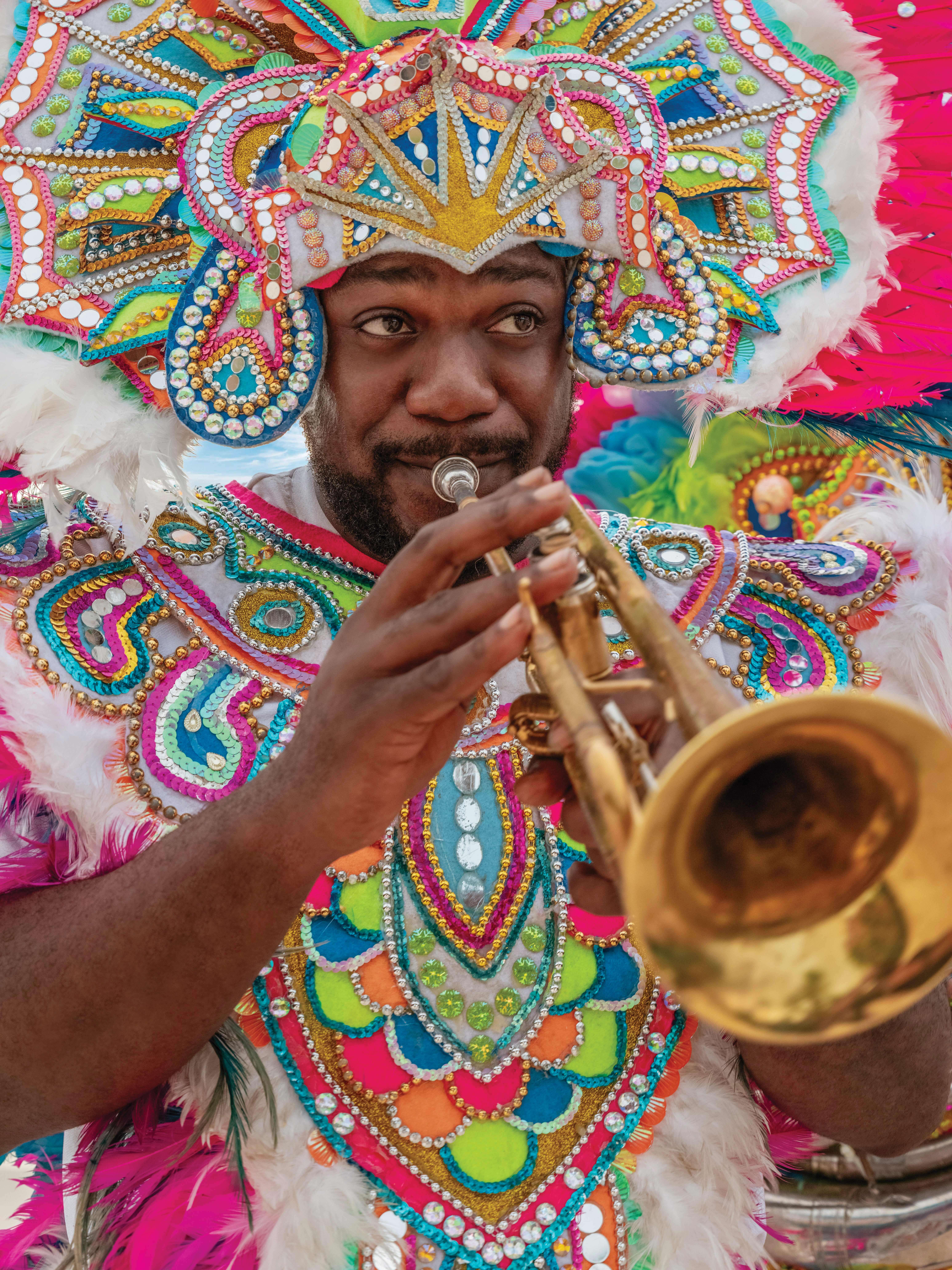
Atlantis has also developed hands-on cultural programming to involve visitors in the craftsmanship behind the parades. Guests can take part in mask-making and costume workshops, creatively wielding cardboard, crepe paper, feathers and rhinestones to create ensembles they can wear while participating in the parade.
Junkanoo is special because it brings the entire community together.”
Now, Junkanoo functions as a year-round cultural system rather than a seasonal event. Once a parade ends, groups immediately begin planning the next design cycle. Schools integrate Junkanoo into arts and music education and communities hold smaller rush-outs tied to local and national celebrations. Its rituals are continuously woven into Bahamian identity through ongoing commitment, creative labor and national pride.
“Junkanoo is special because it brings the entire
community together,” Johnson says. “No matter
a person’s race, background, religion, or political
affiliation, Junkanoo music is so intoxicating it inevitably
gets everyone involved.”
A Closer Look
Interested in learning more about Junkanoo? Nassau’s two dedicated museums are worth a visit.
The Bahamas Museum of Junkanoo
The Bahamas Museum of Junkanoo, located at the entrance of Nassau Cruise Port, offers a contemporary, self-guided overview of Junkanoo’s 200-year evolution. The design includes five exhibition spaces featuring archival costumes, sound installations and rotating works by Bahamian artists. The museum’s mission is to preserve technical knowledge, document community contributions and give Junkanoo an institutional platform to showcase its legacy.
Educulture Junkanoo Museum
A short walk away, the Educulture Junkanoo Museum, founded by cultural leader Arlene Nash Ferguson in her childhood home, presents a more intimate, practitioner-driven perspective. Nash Ferguson, who has participated in Junkanoo for more than 70 years, uses exhibits, photographs, fabrics and instruments to explain not only how Junkanoo works, but why it matters. The museum also offers interactive components, including mask-making, music demonstrations and opportunities to meet veteran performers.