I’m not the best trendspotter.”
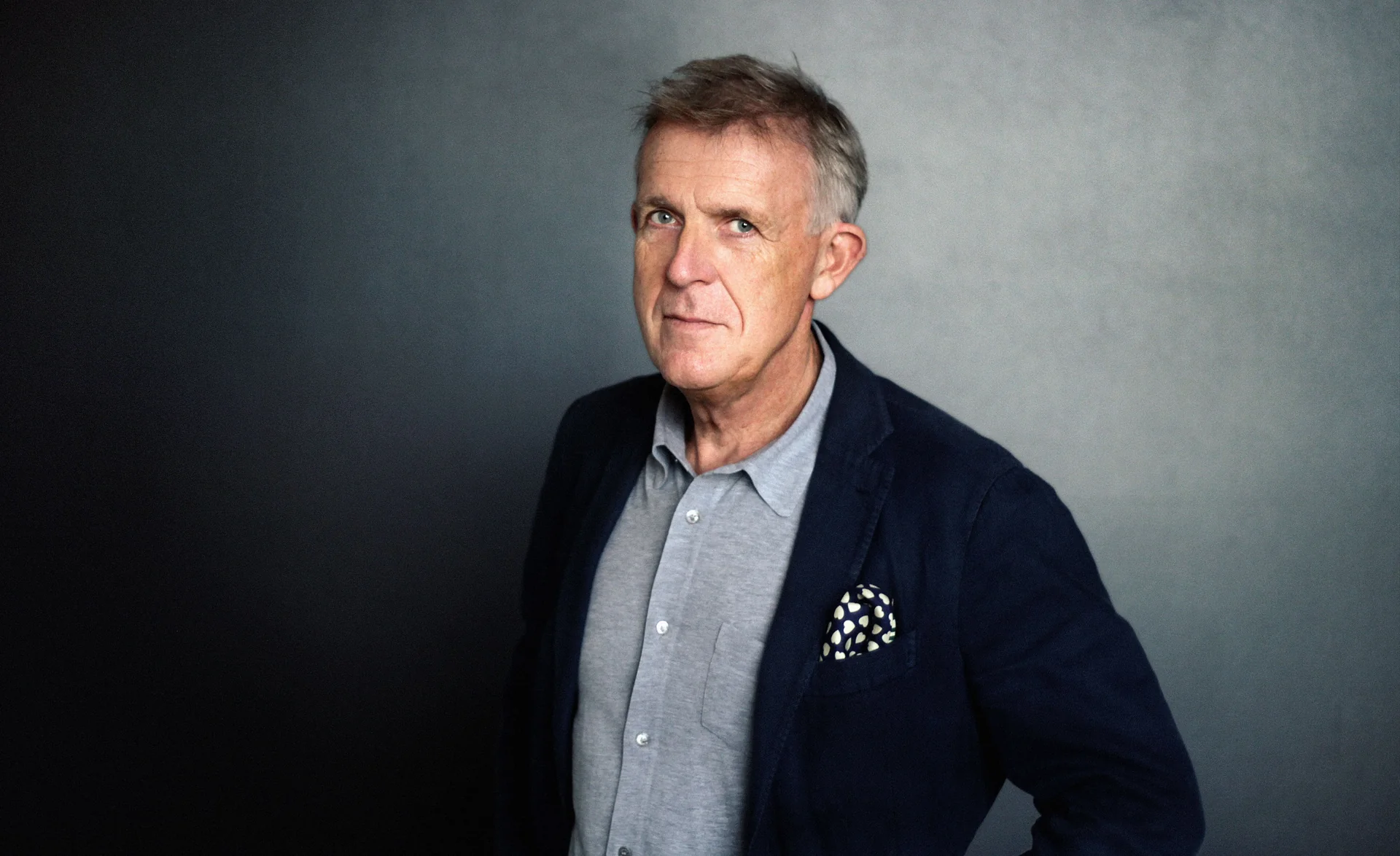
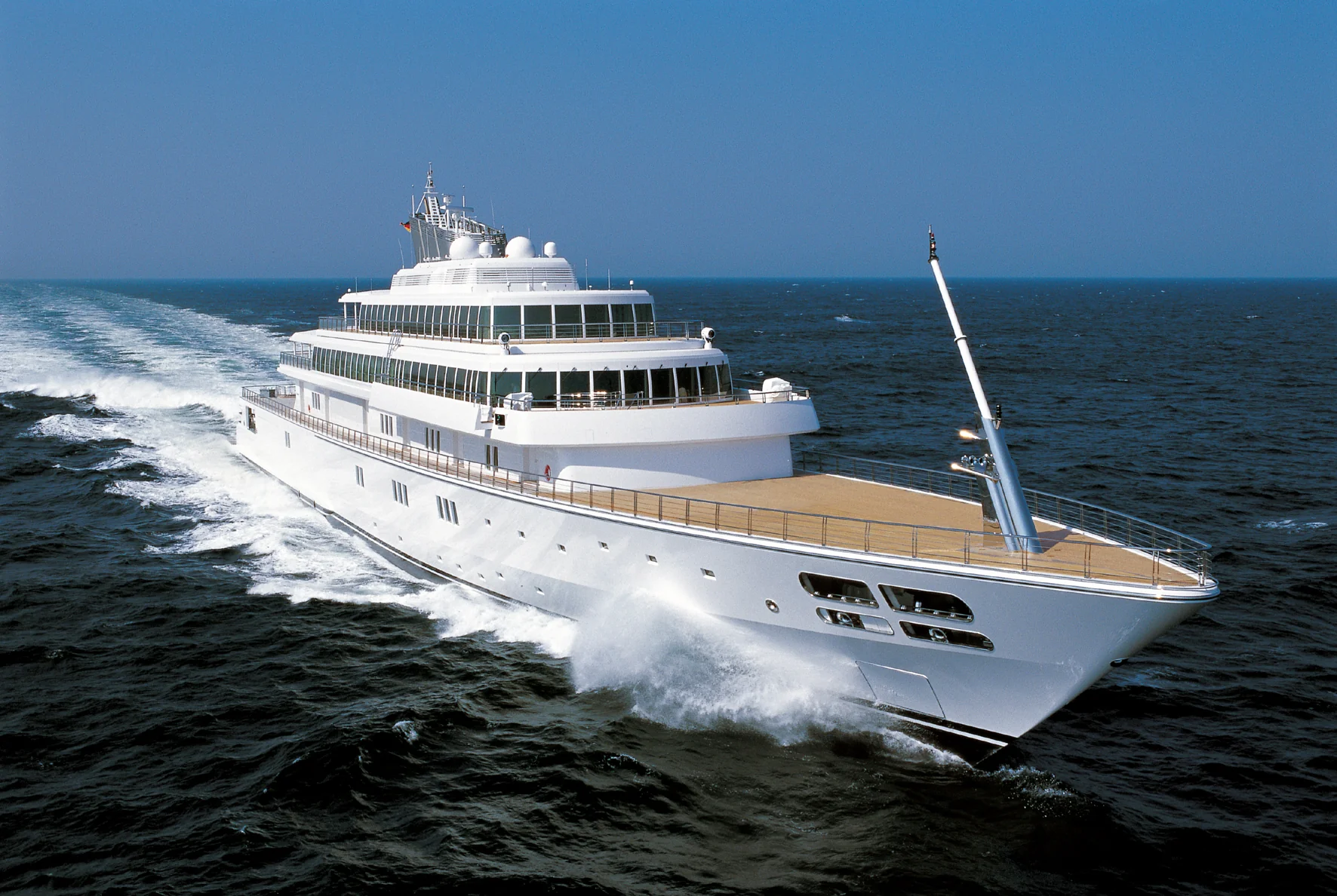
“I’m not the best trendspotter,” says Dickie Bannenberg, the founder of one of the world’s most prestigious yachting design firms, London-based Bannenberg & Rowell. Still, he admits there have been some unmistakable changes in the industry over the past few decades. The most obvious one is probably size. “At the turn of the century, 60 meters was a big yacht,” he says. “Now, you say the same thing for about 80 or 90 meters.”
There is greater interest in what is known as “exploring yachts” too: boats with a quasi-military appearance sometimes built to ice class. “They’ll have thicker hull plating, so they’re good for trips to places like the Northwest Passage,” he says. He’s also observed a desire for more exterior spaces — aft decks, beach clubs, swim platforms — and a greater connection to the sea. “The times of people spending more time on board in main and dining saloons is disappearing fast,” he says.
The wonderfully genial Bannenberg was born with boats in his blood. His Australian-born father Jon is widely recognized as having invented the modern yacht-design business in the mid- to late-1960s. “Up until that point, it was an industry with strictly delineated parts, with a naval architect, an interior designer and an exterior designer,” says Bannenberg. “[My father] brought them all under one roof.”
The elder Bannenberg was also a much-beloved figure in the industry. In 2015, Dickie Bannenberg published an 11-pound book devoted to him. “He was an amazingly charismatic, powerful, persuasive and lovable figure and father,” says Bannenberg. “Clients adored him and hung on every word and every sketch.”
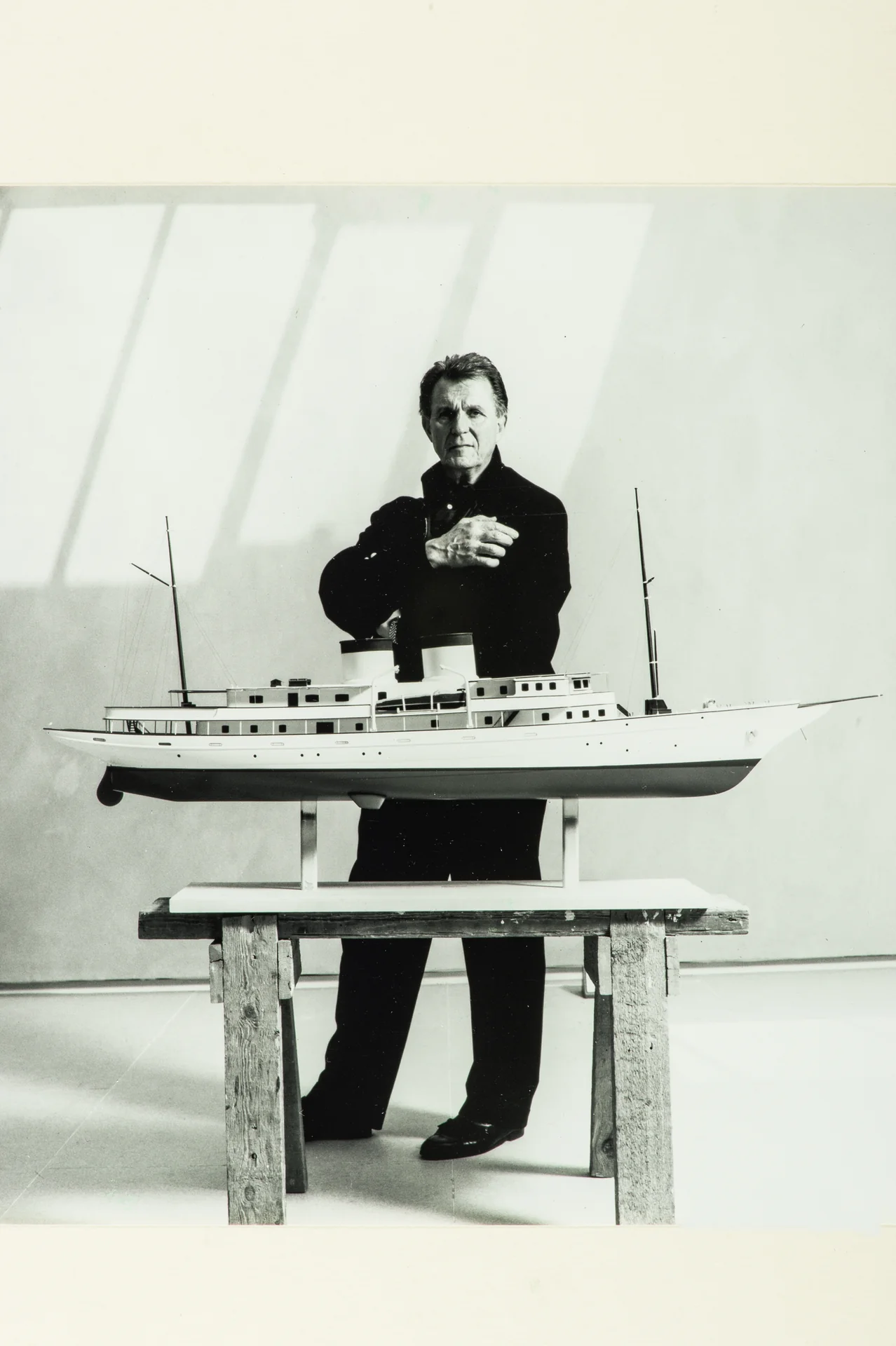
Debonair and dashing, Jon was a self-taught designer. He initially trained as a concert pianist in Sydney and occasionally worked as English playwright, actor, singer and composer Noël Coward’s rehearsal pianist after moving to London. He got into the yachting business almost by happenstance. He was working at an interior design firm, where a client showed him sketches of his new boat. The elder Bannenberg was unimpressed. So, the client told him, “If you’re so clever, you come up with something.” It was the start of a career that would span nearly four decades. During that time, his clients included oil tycoon John Paul Getty, publisher and politician Malcolm Forbes and Oracle co-founder Larry Ellison. He even came up with a design for Fidel Castro, but it was never built.
Dickie Bannenberg’s childhood was full of glamour. He grew up in a 1720s townhouse in Chelsea, London, which had previously belonged to actor Peter Ustinov and famed English stage actress Ellen Terry. His father drove him to school in an Aston Martin DB4 and insisted that his uniform shorts be altered by a Mount Street tailor because he didn’t like the cut. Dickie would accompany his parents to shipyard visits and launches and watch his father sketching on a drawing board at home in the evenings.
Dickie Bannenberg originally studied geography at Cambridge University before being hired as merchandise editor at the British edition of House & Garden magazine. Then, one evening, his father casually asked if he would be interested in working with him. “I jumped at the chance,” he says. He was project manager for about 18 years until his father’s death in 2002 at the age of 72. “It was very unexpected and sudden,” he says. “I think everyone expected him to be doing what he did until he was a hundred.”
Bannenberg took over the firm and the following year hired Simon Rowell as his creative director. “Unlike my father, I’m not an out-and-out designer,” he says. “So, I needed someone to fill that role at the studio.” Today, he heads up a team of 10 and has a two-story office hidden down a side street in Fulham. “We’re surrounded by Pilates studios and expensive children’s nurseries. So, we’re going up in the world compared to our old headquarters, which were near a bed showroom and kebab shop,” he quips.
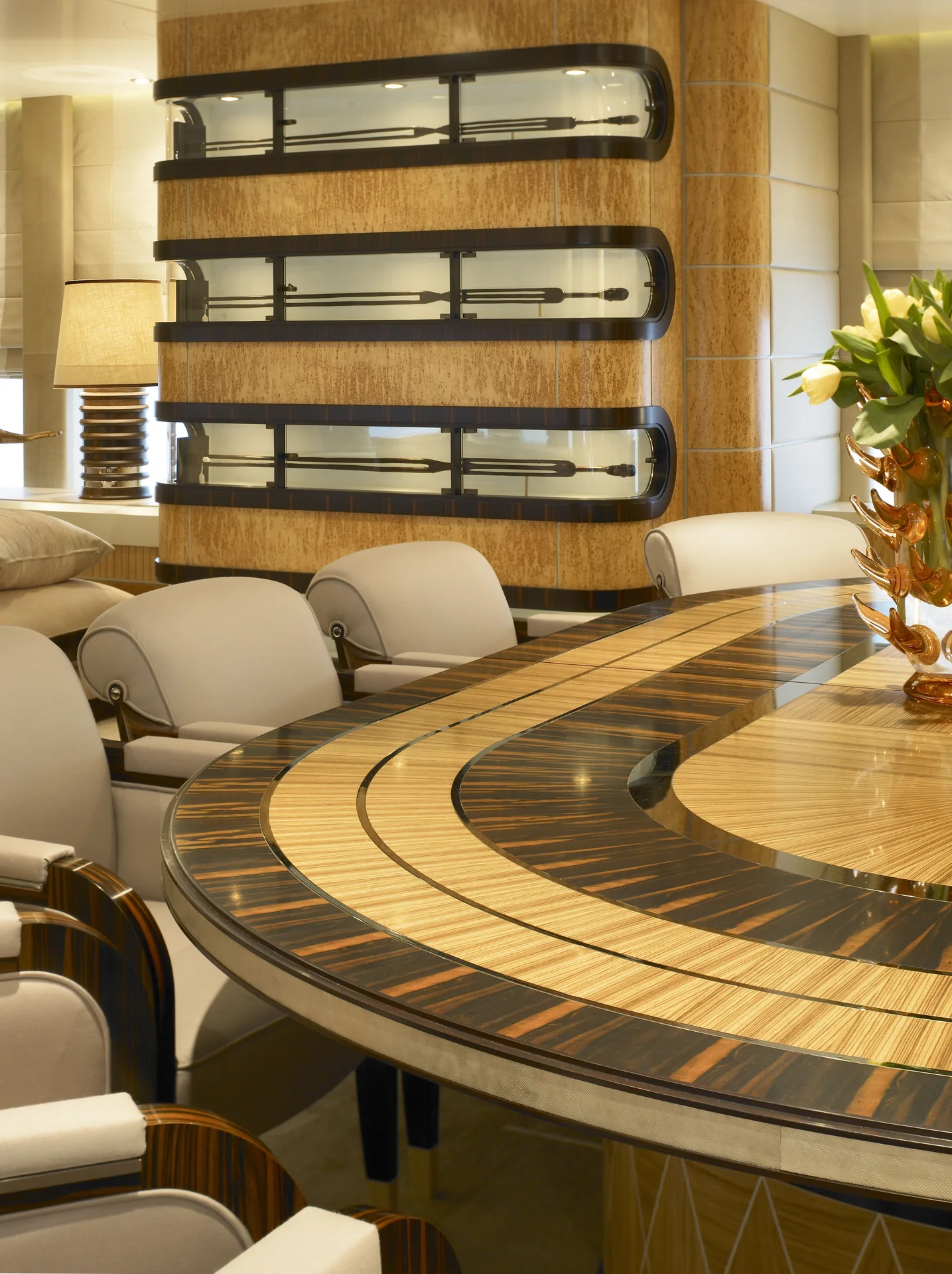
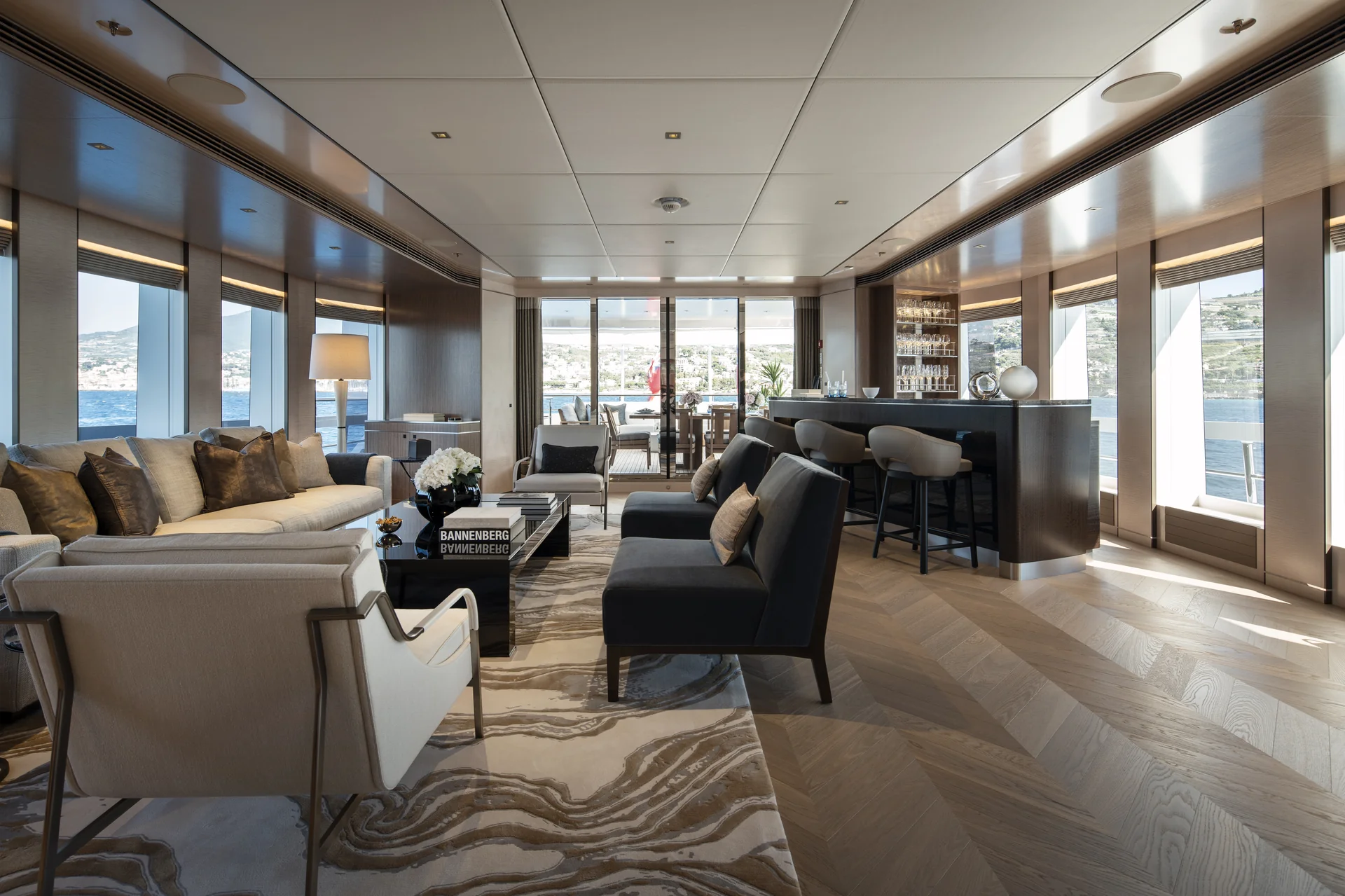
The majority of the company’s work is in interiors. He describes its style as “striking, but at the same time very approachable, clean-cut and contemporary.” Its projects to date have included a three-year rebuild of a classic 1930s yacht, which had belonged to British racing driver and speed record holder Malcolm Campbell. A particularly challenging commission was the 230-foot Predator for Dutch shipyard Feadship. “It was a very unusual boat,” says Bannenberg. “Not much accommodation, but super-high speeds. We had to design things that had a presence and an air of solidity but were super lightweight.” He mentions a vanity made with a stone veneer applied to a honeycomb structure. The company has also completed a handful of exterior designs, including the largest yacht ever built in Spain: the 367-foot Renaissance.
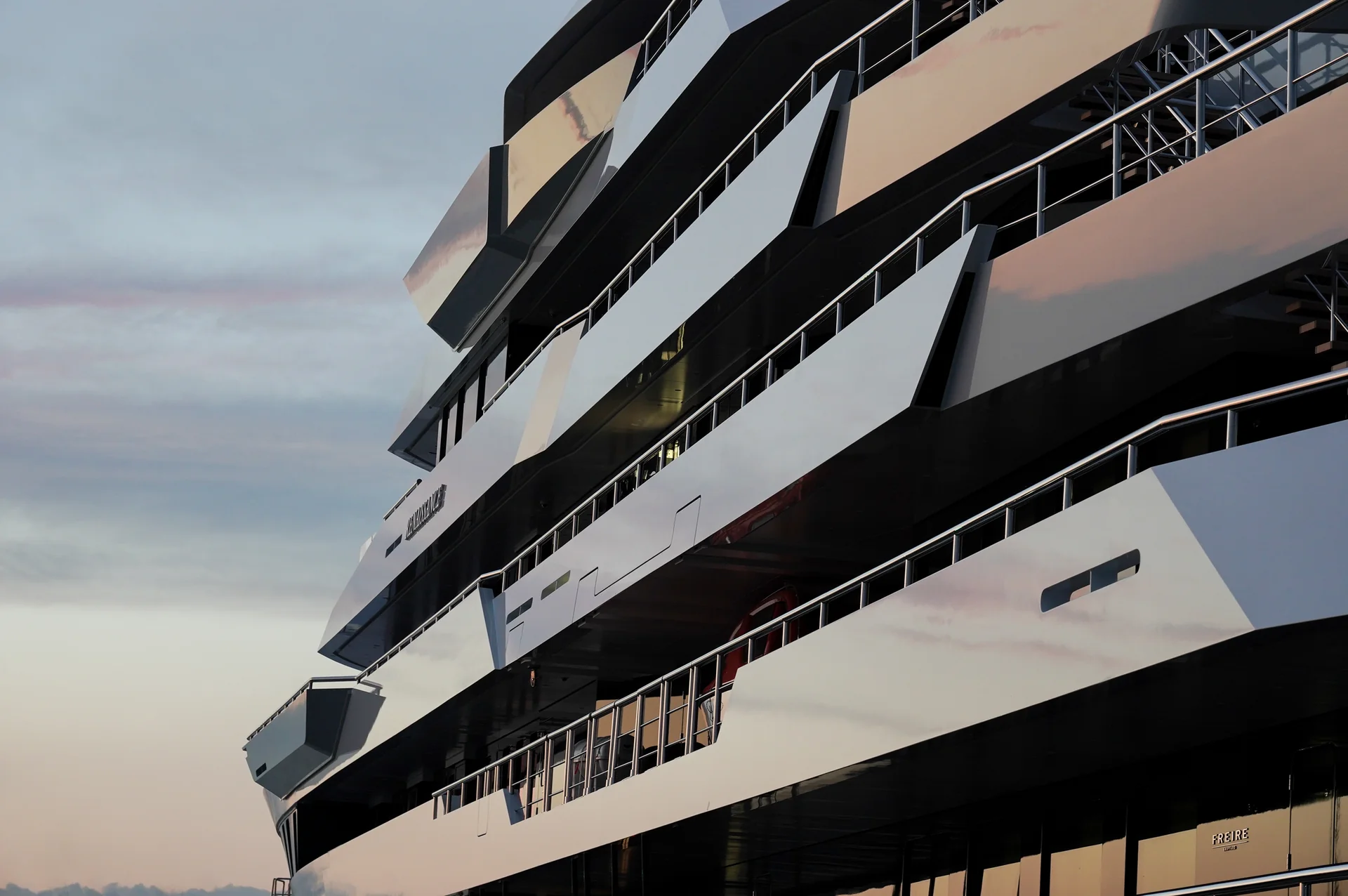
During Covid, Bannenberg took a course on sustainability and has since participated in drawing up a protocol for yachting designers, listing concerns to be addressed in the early stages of conception. “We get the chance to say to clients, ‘You do realize if you have an air-conditioning spec that goes from 15 to 40 degrees, the power requirements are huge?’” he says. Other issues include the expanse of glazing and the color of hulls. “Using dark hues will massively increase the heat they absorb,” he explains.
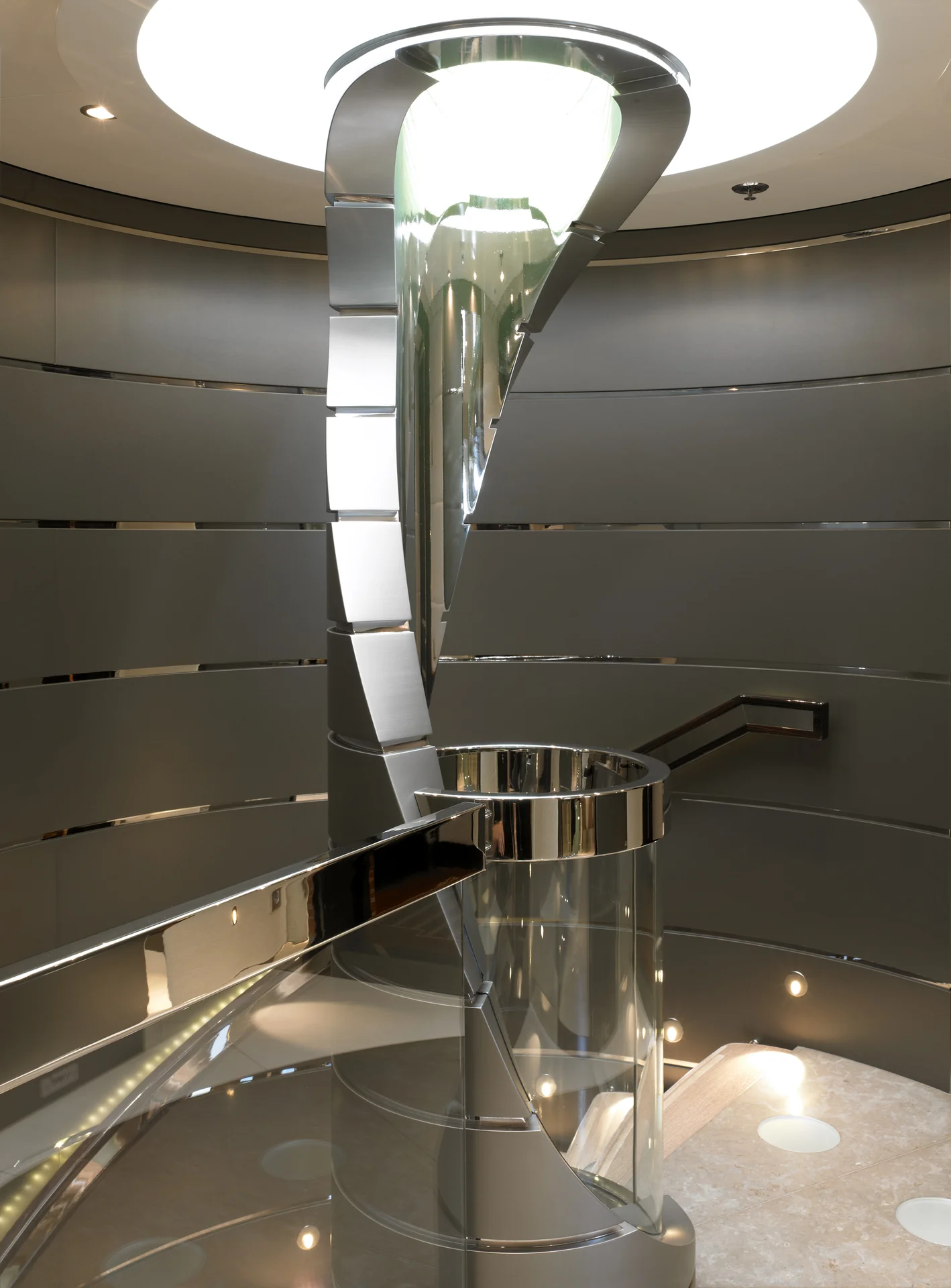
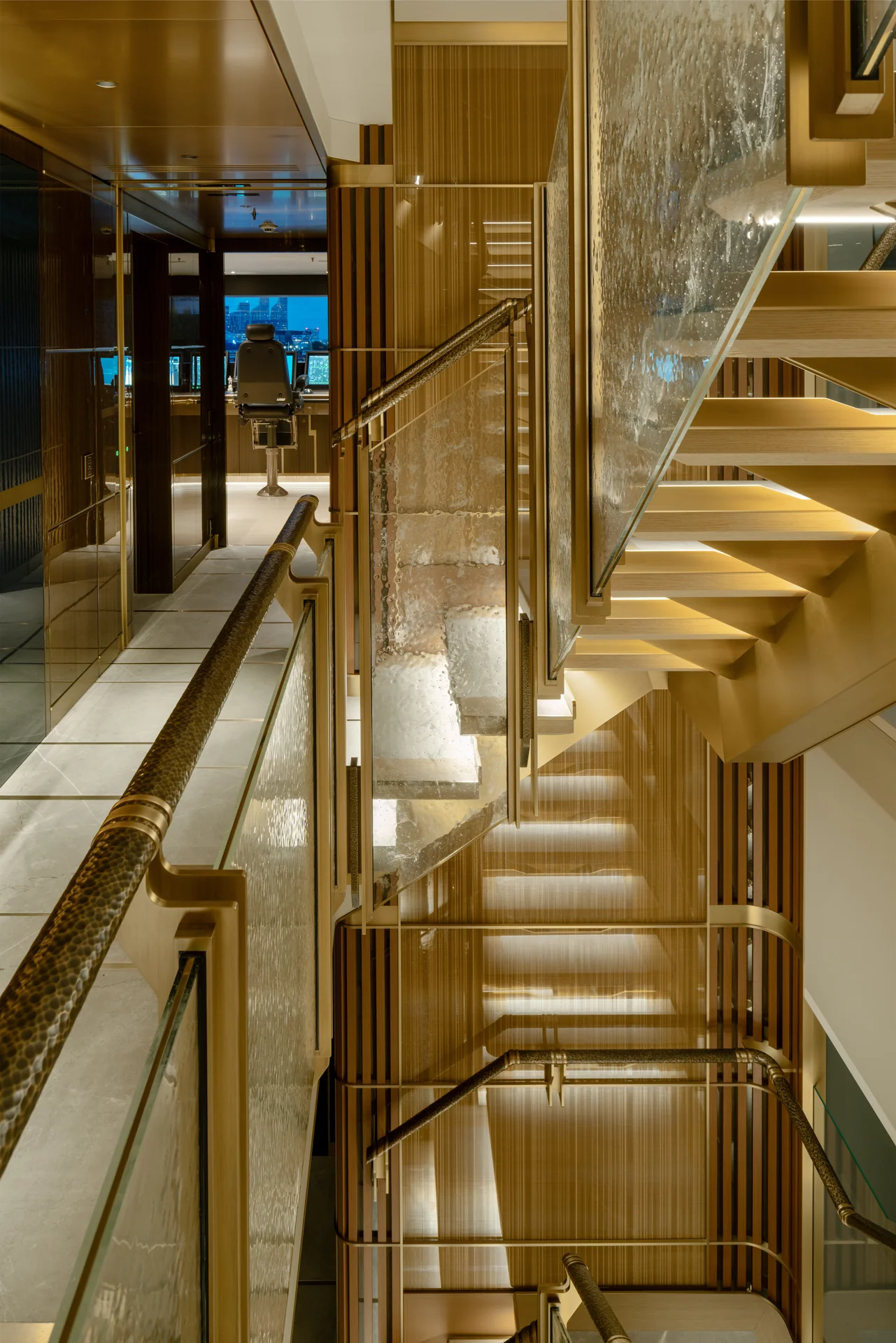
In today’s world, a private yacht is in many respects the ultimate luxury. As Bannenberg notes, “There’s the opportunity to design something remarkable as a one-off.” He has received requests for a jellyfish tank spanning three decks. The main staircase of the 260-foot Feadship Valor, meanwhile, stretched over four levels and was made of more than 40,000 components in bronze, stone and textured glass. For the same boat, the firm created a custom dog spa lined in Emperador marble for the owners’ three Golden Retrievers.
For someone so involved in the yachting industry, it comes as a surprise to discover that Bannenberg doesn’t own a boat. “To my shame,” he says. “As a child, I spent time on the water on holiday in Greece with my father, but that’s the absolute end of it. I really don’t have much of a sailing pedigree.”